What is an Executive Coach ?

An Executive Coach is a professional who works with leaders, executives, and high-potential professionals to help them enhance their leadership skills, decision-making, self-awareness, and overall performance.

Think of them as a strategic partner rather than a boss or trainer — they don’t tell leaders what to do, but help them think more clearly, act more effectively, and grow more intentionally.

In short — an executive coach doesn’t “fix” you; they unlock your best leadership self, so you can perform at your peak and help your team thrive.

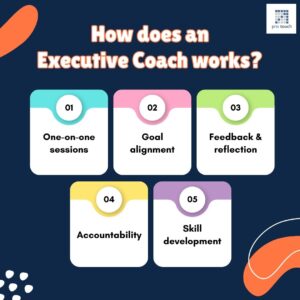
Here’s how it usually works:
Executive Coach
Executive Coach


  • One-on-one sessions: Confidential conversations tailored to the leader’s goals and challenges. Personalized attention – The sessions are private and focused only on the leader’s unique challenges and goals. Safe & confidential space – Leaders can speak openly about struggles they may not share with colleagues or superiors. Structured conversations – The coach uses questions, frameworks, and feedback tools to help the leader reflect and gain clarity. Goal-driven – Each session is tied to specific leadership objectives (e.g., improving delegation, handling conflict, or building executive presence). Action-oriented – Sessions usually end with clear next steps, practices, or strategies to apply in the workplace. Ongoing progress check – Future sessions revisit these goals to track growth and make adjustments. One-on-one sessions are customized coaching journeys designed to help leaders become more effective, confident, and impactful.


  • Goal alignment: in executive coaching means ensuring that the leader’s personal development objectives are in sync with the organization’s strategic priorities. It focuses on both personal growth (e.g., confidence, communication, emotional intelligence) and organizational objectives. Clarifying the leader’s aspirations – Understanding what they personally want to improve (e.g., decision-making speed, influencing skills). Linking to business objectives – Connecting these personal goals to what the company needs (e.g., driving a change initiative, improving cross-functional collaboration). Defining measurable outcomes – Agreeing on what success will look like for both the leader and the organization. Balancing personal and organizational needs – Making sure growth benefits both the individual and the business, without one overshadowing the other. Creating a shared commitment – Leader, coach, and sometimes key stakeholders agree on the priorities and the path forward. It’s basically about making sure the leader’s growth fuels the company’s success—not just one or the other.


  • Feedback & reflection: in executive coaching is all about helping leaders see themselves more clearly so they can make intentional changes. Use tools like 360° feedback, assessments, and observation to build self-awareness. Gathering feedback – Using tools like 360° assessments, stakeholder interviews, or performance reviews to capture multiple perspectives on the leader’s strengths and blind spots. Holding up the mirror – The coach presents this feedback in a constructive, non-judgmental way, helping the leader understand how they’re perceived. Encouraging self-reflection – Through thought-provoking questions and exercises, the leader examines their behaviors, decisions, and impact. Spotting patterns – Identifying habits or mindsets that either support or hinder effectiveness. Turning insight into action – Reflection isn’t just thinking—it’s about deciding what to keep doing, start doing, or stop doing. In short, feedback shows the picture, reflection sharpens it, so the leader can act with greater clarity and confidence.


  • Accountability: Keep the leader on track with agreed-upon actions. Accountability in executive coaching ensures that leaders don’t just talk about change—they actually follow through. Clear commitments – At the end of each session, the leader defines specific actions they’ll take before the next meeting. Regular check-ins – The coach reviews progress, asks what worked, and explores what got in the way if goals weren’t met. Encouraging ownership – The leader takes responsibility for their own growth rather than blaming circumstances. Celebrating progress – Recognizing even small wins keeps motivation high. Adjusting course – If something isn’t working, the coach helps refine strategies instead of letting momentum fade. In essence, accountability is the bridge between intention and impact—it turns coaching insights into measurable results.


  • Skill development: in executive coaching focuses on building the specific leadership capabilities a leader needs to excel in their role and future responsibilities. It improves leadership competencies such as conflict resolution, strategic thinking, or managing change. Identifying priority skills – Pinpointing gaps based on feedback, self-assessment, and organizational needs (e.g., strategic thinking, emotional intelligence, negotiation). Practical learning – Using real workplace challenges as “practice fields” rather than purely theoretical exercises. Behavioral modeling – The coach may demonstrate techniques or share frameworks the leader can apply immediately. Stretch assignments – Encouraging leaders to take on tasks or projects that push them beyond their comfort zone. Ongoing refinement – Revisiting skills over time to strengthen mastery and adaptability. Put simply, it’s about equipping leaders with the right tools in the right moments so they can lead with greater impact and confidence.

Conclusion

Executive coaching is more than a leadership “tune-up” — it’s a structured, confidential partnership that helps leaders unlock their full potential while driving organizational success. Through one-on-one sessions, clear goal alignment, honest feedback & reflection, targeted skill development, and consistent accountability, leaders gain the clarity, confidence, and capability to navigate complex challenges and inspire their teams. Courses like ICF Certification, ICF Coach Training can help to become an Executive Coach.

When done well, executive coaching creates a ripple effect — the leader grows, their team thrives, and the organization as a whole becomes stronger, more agile, and better positioned for long-term success.

What is Executive Coaching ?

Executive coaching is a structured, goal-oriented, one-on-one development process in which a trained coach partners with a senior leader to enhance their leadership effectiveness, decision-making, and overall impact on the organization.

Think of it as a personalized, confidential space for leaders to step back from the daily grind, reflect on challenges, explore new perspectives, and build strategies for both professional and personal growth by doing Executive Coach training. Now let us look at it in detail.

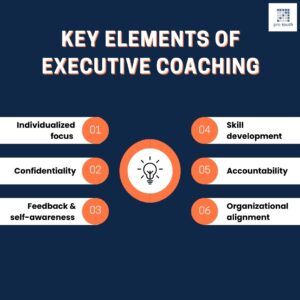
Key elements of executive coaching:

Executive Coaching
Executive Coaching


1. Individualized focus – in executive coaching means the coaching process is completely tailored to the leader’s specific role, personality, challenges, and goals—rather than following a generic, one-size-fits-all program.

  1. Assessing personal strengths and weaknesses through tools like 360-degree feedback, personality assessments, or stakeholder interviews.
  2. Customizing strategies that fit the leader’s leadership style, company culture, and industry context.
  • Addressing real-time challenges—for example, preparing for a high-stakes board meeting or resolving a sensitive team conflict.
  1. Adapting as needs evolve, so the coaching remains relevant as priorities or organizational situations change.

It’s like having a personal trainer—but instead of building muscles, you’re building leadership capacity that matches your unique situation. Tailored to the leader’s unique strengths, challenges, and goals.

2. Confidentiality – in executive coaching means that everything discussed between the coach and the leader stays strictly private, unless the leader explicitly agrees to share certain information.

  1. Builds trust – The leader feels safe to speak openly about doubts, mistakes, fears, or sensitive workplace issues.
  2. Encourages honesty – Without fear of gossip or repercussions, leaders can explore their true thoughts and feelings.
  • Supports vulnerability – Leaders can reflect on personal blind spots or mistakes without damaging their professional image.
  1. Protects organizational interests – Coaches also safeguard confidential business information shared during sessions.

It’s essentially a “vault” for leadership conversations—what goes in, stays in, unless you choose otherwise. A safe, judgment-free environment for honest discussion.

3. Feedback & self-awareness – in executive coaching refers to helping leaders clearly see how their behaviors, decisions, and communication impact others—and how that aligns (or misaligns) with their intentions.

This involves two main parts:

  1. Feedback
    1. Coaches gather input from colleagues, direct reports, and other stakeholders (often via 360-degree feedback or interviews).
    2. This feedback offers an outside-in perspective, revealing patterns the leader may not notice.
    3. The coach helps interpret the feedback constructively, so it becomes a tool for growth rather than criticism.
  2. Self-awareness
    1. Leaders reflect on their values, triggers, habits, and strengths.
    2. They start recognizing blind spots—behaviors or attitudes they were previously unaware of.
    3. Self-awareness allows for more intentional decision-making and leadership presence.

In simple terms: It’s like holding up both a mirror (to see yourself clearly) and a map (to understand where to go next). Coaches help clients understand how they’re perceived and the impact of their actions.

4. Skill development – in executive coaching is about equipping leaders with the specific capabilities they need to lead more effectively—based on their role, goals, and challenges.

Unlike generic leadership courses, this is targeted and immediately applicable to real-world situations.

  1. Identify skill gaps through assessments, feedback, and observation (e.g., communication, delegation, decision-making).
  2. Select priority skills that will have the biggest impact on performance and the organization.
  • Practice in context—using real workplace scenarios, role-plays, and action plans.
  1. Reinforce through accountability—the coach tracks progress, adjusts approaches, and celebrates wins.

Think of it as “on-the-job leadership muscle training”—you don’t just learn about the skill, you strengthen it through repeated, guided use in your actual role. Often includes communication, conflict resolution, emotional intelligence, and strategic thinking.

5. Accountability – in executive coaching means the coach actively supports—and challenges—the leader to follow through on their commitments, turning good intentions into measurable action.

  1. Clear goals are set – Coaching starts with defining specific, realistic, and measurable objectives.
  2. Progress is tracked – The coach checks in regularly to review achievements, setbacks, and next steps.
  • Commitment is reinforced – Knowing they’ll report back encourages leaders to stay focused and consistent.
  1. Course corrections happen quickly – If something isn’t working, the coach helps adjust the strategy rather than letting issues drift.

It’s a bit like having a personal GPS for leadership—it doesn’t just give you the route; it makes sure you actually take it. Coaches help leaders set measurable goals and follow through.

6. Organizational alignment – in executive coaching means ensuring that the leader’s growth and actions are in sync with the company’s vision, values, culture, and strategic goals. While the coaching is personalized to the leader, it also considers the bigger picture—because a leader’s success is deeply tied to the success of the organization.

  1. Clarifying the company’s priorities – The coach helps the leader understand current business strategies, cultural expectations, and performance objectives.
  2. Connecting personal goals to business goals – Development plans are designed so that improving the leader’s skills directly supports organizational needs.
  • Navigating change – Leaders learn to adapt their style and decisions to align with evolving company direction.
  1. Stakeholder engagement – Coaching may include input from the leader’s manager, HR, or board to ensure progress benefits both the individual and the organization.

While focused on the individual, the coaching supports the company’s vision, values, and objectives.

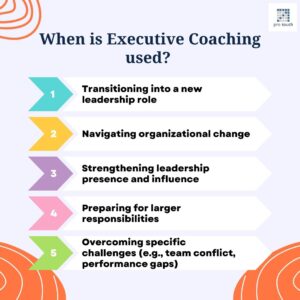
When is Executive Coaching used?

  • Transitioning into a new leadership role
  • Navigating organizational change
  • Strengthening leadership presence and influence
  • Preparing for larger responsibilities
  • Overcoming specific challenges (e.g., team conflict, performance gaps)
Executive Coach Programs

Conclusion

Executive Coaching is more than just professional advice—it’s a structured, confidential partnership that empowers leaders to maximize their potential while driving organizational success. By focusing on individualized growth, ensuring trust through confidentiality, fostering self-awareness via feedback, building critical leadership skills, maintaining accountability, and aligning development with organizational goals, executive coaching delivers results that are both personal and strategic. The best way to begin with Executive Coaching is through ICF Certification, ICF Coach Training, Executive Coach Programs.

In essence, it transforms leadership from simply managing people and processes into inspiring, influencing, and delivering lasting impact—for the leader, their team, and the organization as a whole.

First-Time Managers: Why Coaching is the Ultimate Support System

💼 Who is a First-Time Manager?

A first-time manager is someone transitioning from an individual contributor role to a position where they now lead others — managing performance, guiding teams, and making decisions that affect people and projects. ICF certification, ICF coach training certifications can help in gaining more insight about the topic.

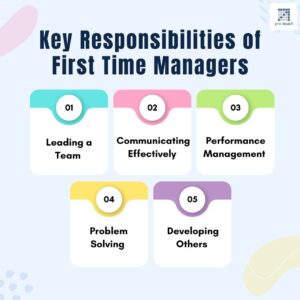
🔑 Key Responsibilities

  1. Leading a Team – Set goals, delegate tasks, and motivate team members.
  2. Communicating Effectively – Keep everyone aligned through clear, timely communication.
  3. Performance Management – Give feedback, conduct reviews, and manage outcomes.
  4. Problem Solving – Resolve conflicts and make decisions that support team success.
  5. Developing Others – Coach, mentor, and identify growth opportunities for team members.
first-time manager
first-time manager

🧠 Essential Skills for Success

  • Emotional Intelligence (EQ) – Understand and manage your own emotions and those of others.
  • Time Management – Balance your responsibilities and prioritize effectively.
  • Adaptability – Learn to shift strategies and approaches based on team and business needs.
  • Delegation – Let go of doing everything yourself and trust your team.
  • Active Listening – Hear concerns and suggestions fully before responding.

🚀 Top Tips for First-Time Managers

  1. Build Trust First – Be transparent, consistent, and approachable.
  2. Set Clear Expectations – Align the team on goals, roles, and standards.
  3. Don’t Micromanage – Empower your team while staying available for support.
  4. Ask for Feedback – Learn how your leadership style is being received.
  5. Keep Learning – Read books, attend workshops, or get a coach/mentor.

Why Coaching Is the Ultimate Support System:

Coaching stands out as the ultimate support system in both personal and professional growth because it provides individuals with the structure, space, and strategies they need to thrive. Here’s why:

  1. Personalized Development: Coaching is tailored to an individual’s specific goals, challenges, and context. Unlike generic advice or training, coaching adapts to the person, making it far more effective in helping them move forward with clarity and confidence.
  2. Safe Space for Reflection: A coach provides a confidential, non-judgmental environment where individuals can openly explore their thoughts, fears, and goals. This safe space allows for honest reflection, which is often the first step toward meaningful change.
  3. Clarity and Focus: With regular coaching, people gain clarity on what truly matters. Coaches help individuals identify priorities, cut through distractions, and focus their energy on high-impact actions aligned with their purpose or vision.
  4. Accountability and Progress: Coaching creates a powerful system of accountability. Knowing someone is tracking their progress and expecting follow-through motivates individuals to stay on course and take consistent action toward their goals.
  5. Skill and Mindset Development: Coaches don’t just help people solve problems — they help them grow. Whether it’s leadership, communication, emotional intelligence, or resilience, coaching cultivates both hard and soft skills needed for long-term success.
  6. Unbiased Perspective: Unlike mentors, managers, or friends, coaches bring an objective, outsider’s perspective. This neutrality helps individuals see blind spots, challenge limiting beliefs, and make more informed decisions.
  7. Support Through Change: Change is hard — whether it’s a career transition, leadership role, or personal transformation. Coaching provides ongoing support, encouragement, and tools to navigate uncertainty and complexity with confidence.
  8. Empowerment Over Dependency: Rather than offering solutions, coaches empower individuals to find their own answers. This builds self-reliance, confidence, and the ability to face future challenges independently.

🎯 First-Time Managers: Why Coaching is the Ultimate Support System

Coaching
Coaching


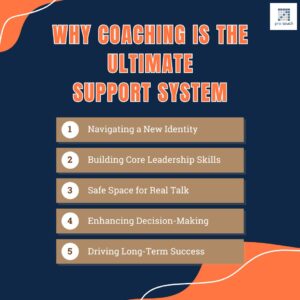
🧭 1. Navigating a New Identity

Transitioning from a peer to a leader is one of the toughest career shifts. Coaching helps first-time managers: Understand their new role. Build confidence as a leader. Manage the mental and emotional adjustment

Coaching = A mirror + a map — it reflects strengths and challenges, while guiding them toward effective leadership behaviors.

🛠️ 2. Building Core Leadership Skills

First-time managers need practical, personalized skill development. Coaching provides targeted support to build: Communication and feedback skills. Emotional intelligence. Conflict resolution. Time and priority management

Unlike one-size-fits-all training, coaching adapts to real-time challenges.

🤝 3. Safe Space for Real Talk

New managers often face internal doubts or team issues they can’t openly discuss with peers or bosses. Coaching offers a confidential space to: Express vulnerabilities without judgment. Reflect on mistakes and learn from them. Test ideas before implementing them

💡 4. Enhancing Decision-Making

With so many new responsibilities, first-time managers are under pressure to make the right calls. Coaching: Improves critical thinking. Encourages perspective-taking. Helps clarify values-based decision-making. It accelerates growth by turning experience into insight.

📈 5. Driving Long-Term Success

Investing in coaching early sets the foundation for a successful leadership journey. Coached managers are more likely to: Stay engaged and motivated. Lead more productive, collaborative teams. Grow into higher-level leadership roles faster

✅ Conclusion:

Coaching Isn’t a Luxury — It’s a Launchpad: For first-time managers, coaching is not just support. It’s an accelerant, a safety net, and a strategic investment in future leaders.

Coaching is not a one-time solution — it’s a continuous partnership that drives sustained growth. It combines insight, structure, challenge, and encouragement, making it the ultimate support system for anyone striving to lead, perform, or live at their highest potential.

Coaching Is the Ultimate Support for First-Time Managers: The transition to management can be overwhelming, but coaching provides the clarity, confidence, and capability new leaders need. It offers personalized guidance, a safe space for growth, and real-time support to develop leadership skills that last.

By investing in coaching, organizations empower first-time managers to lead with purpose, communicate with impact, and build high-performing teams from the start — making coaching not just a support system, but a strategic foundation for long-term leadership success. Courses like ICF certification, ICF coach training can enhance your skills and knowledge.

How Coaching Drive High-Performance Teams

High performance refers to achieving exceptional results, efficiency, or productivity in a given area, typically exceeding standard expectations. It can apply to individuals, teams, organizations, systems, or machines. To know more it is always good to get certified in ICF certification, ICF coach training. Here’s how it’s commonly understood in different contexts:

  1. In the Workplace (People/Teams):

High performance in terms of workplace means:

  • Consistently meeting or exceeding goals.
  • Demonstrating strong skills, accountability, and motivation.
  • Collaborating effectively, often under pressure.
  • Continuously improving and innovating.

Example: A high-performing sales team not only hits its targets every quarter but also finds ways to increase customer satisfaction and streamline the sales process.

  1. In Organizations:

High-performance with regards to organizations:

  • Align goals across all levels.
  • Invest in leadership, culture, and employee development.
  • Operate efficiently with clear strategies and values.
  • Encourage continuous feedback and learning.
  1. In Technology or Engineering:

A high-performance system or product with respect to technology or engineering:

  • Works faster, more reliably, and with greater precision.
  • Uses resources efficiently (e.g., computing power, energy).
  • Outperforms standard models or competitors.
  1. In Sports and Fitness:

High performance in sports and fitness refers to:

  • Athletes achieving peak physical and mental condition.
  • Consistently excelling in training and competition.
  • Using advanced techniques, nutrition, and coaching.

Key Traits of High Performance: High performance—whether in individuals, teams, or organizations—is marked by specific characteristics that consistently lead to exceptional outcomes. Here are the key traits:

  • Clarity of goals and expectations: Clear vision, mission, and goals. Alignment of daily actions with long-term objectives. Everyone knows what success looks like.
  • Focus and discipline: Self-awareness and empathy in interactions. Resilience under stress and change. Leaders and members regulate emotions to maintain focus and morale.
  • Adaptability and resilience: Openness to change and new ideas. Fast decision-making and iteration. Continuous improvement is part of the culture.
  • Collaboration and communication: Open, honest, and respectful dialogue. Active listening and constructive feedback. Clear channels for sharing information and ideas.
  • Continuous learning and growth: Emphasis on skill development and adaptability. Mistakes are treated as learning opportunities. Coaching, mentoring and training are ongoing.
  • Feedback-driven improvement: Individuals and teams take ownership of results. There’s a culture of responsibility—not blame. Regular feedback and performance reviews drive improvement.

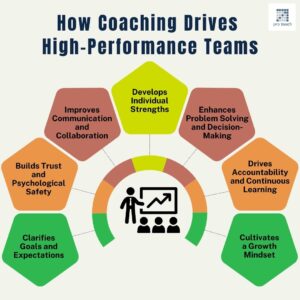
Coaching drives high-performance teams by enhancing individual and collective potential, aligning efforts, and fostering a culture of continuous growth. Here’s how:

high-performance teams

🔹 1. Clarifies Goals and Expectations: Coaches help teams define clear, shared objectives. Everyone understands their roles and what success looks like.

Result: Teams stay focused and aligned, reducing confusion and conflict.

🔹 2. Builds Trust and Psychological Safety: Coaching promotes open dialogue and active listening. It encourages honest feedback and vulnerability.

Result: Team members feel safe to share ideas, take risks, and admit mistakes—crucial for innovation and improvement.

🔹 3. Improves Communication and Collaboration: Coaching enhances interpersonal skills and emotional intelligence. Coaches help resolve conflicts and build stronger relationships.

Result: Better teamwork, fewer misunderstandings, and more synergy.

🔹 4. Develops Individual Strengths: Coaches identify and nurture each team member’s strengths and growth areas. Encourages accountability and ownership of development.

Result: Team members feel valued and motivated, boosting engagement and contribution.

🔹 5. Enhances Problem Solving and Decision-Making: Coaches encourage reflective thinking, strategic questioning, and creative solutions. Teams learn to analyze challenges and make informed decisions collaboratively.

Result: Faster, smarter responses to change and obstacles.

🔹 6. Drives Accountability and Continuous Learning: Coaching establishes performance expectations and follow-through. Feedback loops help teams learn from successes and failures.

Result: Teams adapt and improve continuously, rather than stagnate.

🔹 7. Cultivates a Growth Mindset: Coaches challenge limiting beliefs and promote resilience. Encourages learning from feedback and viewing challenges as opportunities.

Result: High-performing teams stay agile, motivated, and ready for growth.

✅ Conclusion:

Coaching transforms teams from good to great by unlocking potential, strengthening relationships, and building a high-trust, high-impact culture. It’s not just about fixing problems—it’s about unleashing excellence. To gain in-depth knowledge it is good to get certified in ICF certification, ICF coach training.

Coaching is a powerful catalyst for building high-performance teams. It creates clarity, strengthens communication, fosters trust, and drives accountability. By focusing on both individual growth and team dynamics, coaching empowers teams to reach their full potential, adapt to change, and consistently deliver exceptional results. In today’s fast-paced and competitive environment, coaching isn’t just a support tool—it’s a strategic necessity for sustainable high performance.

Why Top Leaders Are Investing in Coaching for Growth

There is a famous saying “A good coach can change a game, A great coach can change a life.” Such a lovely quote and it has a wonderful meaning to it. Well in today’s topic we are going to study about why Top leaders are investing in coaching for growth. Now we all know what is coaching; however, we have to understand the concept about how coaching can help in growth. There are few courses which can enhance the skill set as well as a good understanding about the topic. Courses like ICF certification, ICF coach training. Let’s dive into the topic to understand in detail.

Coaching for growth is a structured, goal-oriented process focused on helping individuals unlock their potential and achieve personal or professional development. It is especially useful in workplace and leadership settings, where growth can refer to improving performance, expanding skill sets, building confidence, or preparing for new responsibilities.

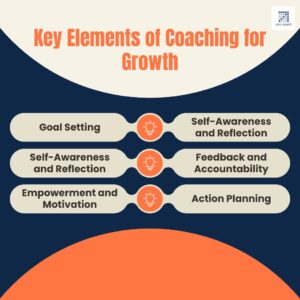
Key Elements of Coaching for Growth:


  1. Goal Setting: Clear, measurable goals are defined to focus the coaching effort (e.g., leadership development, communication improvement, career progression).
  2. Self-Awareness and Reflection: The coachee is encouraged to explore their values, strengths, limiting beliefs, and blind spots.
  3. Skill and Capability Building: Coaching supports the development of new skills or behaviors needed for personal or professional success.
  4. Feedback and Accountability: Regular, constructive feedback helps the individual stay on track, while accountability ensures commitment to growth goals.
  5. Empowerment and Motivation: The coach supports the coachee in taking ownership of their development and maintaining motivation over time.
  6. Action Planning: Coaching sessions often lead to practical action steps, enabling continuous learning and progress.

Benefits of Coaching for Growth:

  • Accelerates personal and professional development
  • Improves confidence and decision-making
  • Enhances leadership and interpersonal skills
  • Increases adaptability and resilience
  • Supports career transitions or advancement

Who Can Benefit?

  • Emerging leaders or new managers
  • High-potential employees
  • Individuals seeking career growth or role transitions
  • Professionals facing performance or engagement challenges

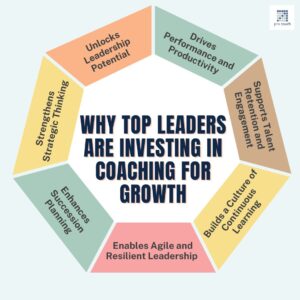
Top leaders are increasingly investing in coaching for growth because it offers strategic value—not just for individual development, but for driving overall organizational performance. Here’s why:

✅ 1. Unlocks Leadership Potential

Coaching helps leaders and high-potential employees recognize and maximize their strengths, address blind spots, and develop critical leadership skills—resulting in more capable, confident, and adaptable leaders.

✅ 2. Drives Performance and Productivity

Personalized coaching enhances focus, decision-making, and accountability. Leaders who receive coaching often show measurable improvements in team performance and business outcomes.

✅ 3. Supports Talent Retention and Engagement

When leaders invest in employees’ growth, it signals care and commitment. This builds trust, boosts morale, and reduces turnover—especially among ambitious, growth-minded professionals.

✅ 4. Enables Agile and Resilient Leadership

In a rapidly changing business environment, coaching helps leaders stay adaptable, manage stress, and lead through complexity with emotional intelligence and clarity.

✅ 5. Builds a Culture of Continuous Learning

When top leaders engage in coaching, it sets the tone for a growth mindset across the organization—encouraging feedback, learning, innovation, and development at all levels.

✅ 6. Enhances Succession Planning

Coaching helps prepare future leaders by equipping them with the mindset and skills needed to step into senior roles—ensuring leadership continuity and long-term business success.

✅ 7. Strengthens Strategic Thinking

Executive coaching fosters systems thinking, long-term planning, and sharper business judgment—all essential for leaders navigating complex challenges.


🟦 Conclusion:

Top leaders invest in coaching for growth because it creates better leaders, stronger teams, and more adaptive, high-performing organizations. To gain more information and knowledge to enhance the skills it is good to do these courses like ICF certification, ICF coach training. These trainings will give you an added advantage in carrying forward your work with at most accurate leadership capabilities and also foresee the organizational success.

Coaching for growth is no longer a luxury—it’s a strategic investment. Top leaders recognize that cultivating talent, improving leadership capabilities, and fostering a culture of continuous development are key drivers of organizational success. By investing in coaching, they not only empower individuals to reach their full potential but also build resilient, high-performing teams equipped to lead in a dynamic world. In essence, coaching for growth fuels both personal transformation and business excellence.