
As an Organizational and Counselling Psychologist, I frequently encounter a paradox in modern workplaces. Teams are highly qualified, technically skilled, and driven by clear targets, yet productivity is disrupted by miscommunication, emotional burnout, unresolved conflicts, and leadership friction. These challenges rarely stem from a lack of competence. More often, they arise from gaps in emotional intelligence that remain unaddressed at a systemic level.
Emotional intelligence has traditionally been positioned as an interpersonal skill. However, when viewed through a business and psychological lens, it becomes a performance capability that directly influences outcomes.

Emotional Intelligence as a Core Workplace Competency
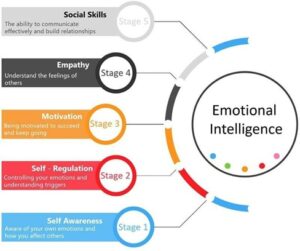
Emotional intelligence refers to the ability to recognise, understand, regulate, and use emotions effectively in oneself and others. Goleman’s framework identifies five foundational elements: self-awareness, self-regulation, motivation, empathy, and social skills (Goleman, Emotional Intelligence: Why It Can Matter More Than IQ, 1995).
In organisational contexts, these competencies shape how individuals handle pressure, engage in feedback conversations, collaborate across teams, and lead during uncertainty. From a counselling psychology perspective, emotions are primary drivers of behaviour. When emotional processes remain unmanaged, even the most skilled professionals struggle to perform consistently.
For instance, a technically strong employee may intend to be “efficient” in meetings but come across as dismissive or abrupt. Without emotional awareness, this gap between intent and impact often damages team dynamics and trust.
The Organisational Cost of Emotional Blind Spots
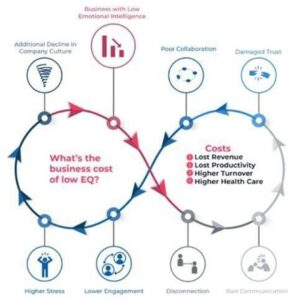
Many organisations underestimate the cost of low emotional intelligence. Leadership derailment, team disengagement, and high attrition are frequently rooted in emotional mismanagement rather than technical incompetence. Research by the Center for Creative Leadership highlights emotional competence deficits as a leading cause of leadership failure (CCL, The Cost of Poor Emotional Intelligence, 2019).
In practice, this often appears as managers reacting defensively to feedback, avoiding difficult conversations, or escalating conflicts emotionally. Over time, such patterns weaken psychological safety, slow decision-making, and reduce collaboration across teams.
Why Emotional Intelligence Requires Structured Training?
Emotional intelligence is not an innate personality trait reserved for a few. It is a developable capability. However, expecting employees or leaders to cultivate it organically is unrealistic. Structured training provides the bridge between psychological insight and behavioural change.
Effective emotional intelligence training begins with self-awareness. Through assessments, reflective exercises, and guided feedback, individuals gain insight into emotional triggers and habitual responses (Boyatzis, Developing Emotional Intelligence, 2008). Awareness creates choice, allowing individuals to respond intentionally rather than react automatically.
For example, during leadership training sessions, managers often recognise that their attempt to “be direct” during performance reviews is perceived as criticism rather than clarity. Emotional intelligence training helps leaders deliver the same message with emotional attunement, improving acceptance without compromising accountability.
The next phase focuses on emotional regulation. Training introduces practical strategies such as cognitive reframing and stress regulation, enabling professionals to maintain clarity under pressure (Gross, Emotion Regulation: Conceptual Foundations, 2015). From a business standpoint, this improves judgment, reduces conflict escalation, and enhances decision quality.
Viewing Emotional Intelligence Through a Business Performance Lens
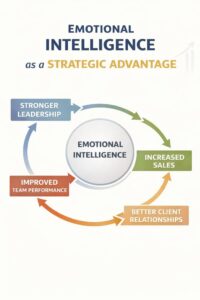
What differentiates impactful training is its alignment with business outcomes. Emotional intelligence training should not exist in isolation from organisational goals. When designed strategically, it directly supports leadership effectiveness, team performance, and client relationships.
In sales and client-facing roles, emotionally intelligent professionals are better equipped to read emotional cues, manage objections calmly, and adapt communication styles in real time. For instance, a salesperson trained in emotional intelligence is more likely to recognise hesitation beneath a client’s objection and respond with reassurance rather than pressure. Empathy-driven communication has been linked to improved client satisfaction and loyalty (Riess et al., Empathy Training for Professionals, 2012).
Integrating Counselling Psychology into Corporate Learning
From a counselling psychology perspective, sustainable change occurs when individuals feel psychologically safe to reflect and experiment with new behaviours. When counselling principles are integrated into corporate training, emotional intelligence development becomes deeper and more sustainable.
This approach does not dilute performance expectations. Instead, it strengthens accountability by helping individuals understand the emotional drivers behind their behaviour. Employees who feel emotionally supported demonstrate higher resilience, ownership, and commitment to organisational goals (Gallup, State of the Global Workplace, 2022).
Conclusion: Emotional Intelligence as a Strategic Advantage
Emotional intelligence sits at the intersection of human behaviour and business performance. When organisations invest in emotionally intelligent training grounded in psychological science and aligned with business strategy, emotions shift from being a hidden risk to a competitive advantage. As an Organizational and Counselling Psychologist, I view emotional intelligence training not as a soft intervention, but as a strategic lever that strengthens leadership, culture, and long-term performance.