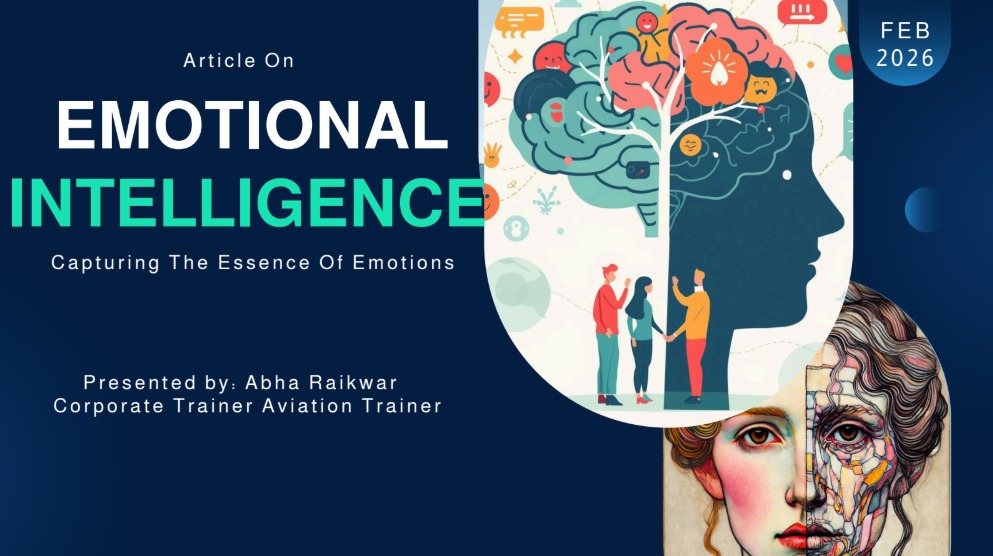

In an age where technology and artificial intelligence are transforming the way we work, efficiency has reached unprecedented levels. Automated systems handle data, generate reports, and optimize processes faster than ever before. Yet, despite these advancements, one critical element of workplace success remains uniquely human—Emotional Intelligence (EI).
“What I’ve come to realize is that emotional intelligence was the only way I knew how to lead, and is, in my opinion, the only way to inspire real change.”
— Kevin Allen
While machines can process information, they cannot understand emotions, interpret human behavior, or navigate the complexities of workplace relationships.Emotional intelligence bridges this gap. It is the ability to recognize, understand, and manage one’s own emotions while effectively responding to the emotions of others. In today’s evolving workplace, EI is no longer a “soft” skill—it is a strategic advantage.
Emotional Intelligence in Action: A Real-Life Scenario

Captain Riya was piloting a commercial flight from Delhi to London when unexpected turbulence hit. The cabin shook, passengers grew anxious, and the crew instinctively looked to her for reassurance.
Instead of focusing only on technical procedures, Captain Riya calmly addressed the passengers over the intercom:
“Ladies and gentlemen, we’re experiencing some turbulence. This is completely normal, and our aircraft is designed to handle it. Please stay seated, and we’ll be through this shortly.”
Her composed tone and empathetic reassurance immediately eased the tension. The cabin crew mirrored her calm, and passengers settled down. Later, one passenger shared that her voice alone made them feel safe.
This moment was not just about flying skills—it was emotional intelligence in action. By recognizing fear and responding with empathy and clarity, Captain Riya transformed anxiety into trust. From a training perspective, this highlights an essential truth: professionals are not just managing systems or processes—they are managing human emotions, often under pressure.
Work today is not only about completing tasks; it is about how people collaborate, communicate, and respond to pressure. Emotional intelligence shapes workplace behavior by influencing decision-making, relationships, and leadership presence.
Professionals with strong emotional intelligence are more likely to:
Stay calm under pressure
Recover quickly from setbacks
Communicate clearly during uncertainty
Build trust across teams and hierarchies
In learning and development environments, these behaviors consistently emerge as the key differentiators between average performers and high-impact professionals.
What Is Emotional Intelligence and Why It Matters
Emotional intelligence, often referred to as EQ, is the ability to recognize, understand, and manage one’s own emotions as well as those of others. Unlike IQ, which focuses on cognitive abilities, EQ determines how individuals navigate relationships, handle stress, and make decisions in real-world situations.
Research has linked high emotional intelligence to improved mental health, stronger leadership capability, and more meaningful interpersonal connections—making it a vital skill across roles and industries.
The Science Behind Emotional Intelligence
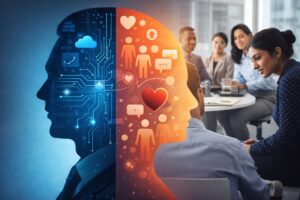
Neuroscience research shows that identifying and labeling emotions helps calm the brain’s emotional centers, reducing stress and improving clarity. Psychologists Peter Salovey and John Mayer conceptualized emotional intelligence as the ability to perceive, use, understand, and manage emotions.
The Mayer-Salovey-Caruso Emotional Intelligence Test (MSCEIT) further supports EI as a measurable and developable capability rather than a fixed personality trait.
Five Signs You Have High Emotional Intelligence
1.You recognize and label your emotions accurately in real time.
2.You pause before reacting, choosing thoughtful responses over impulsive ones.
3.You read social cues with curiosity rather than assumption.
4.You reframe challenges to build resilience instead of rumination.
5.You repair relationships after conflict while maintaining healthy boundaries.
Conclusion
As technology continues to advance, emotional intelligence remains the defining human skill in the workplace. While automation enhances speed and efficiency, EI determines how effectively individuals lead, collaborate, and adapt to change.
From a training and development perspective, emotional intelligence is not abstract or theoretical—it is a learnable, practical skill. Organizations that consciously invest in EI development cultivate emotionally aware leaders, resilient teams, and healthier workplace cultures. In the future of work, emotional intelligence will not replace technical expertise, but it will decide how successfully it is applied.
References
Goleman, D. (1995). Emotional Intelligence: Why It Can Matter More Than IQ. Bantam Books.
Goleman, D. (1998). Working with Emotional Intelligence. Bantam Books.
Salovey, P., & Mayer, J. D. (1990). Emotional Intelligence. Imagination, Cognition and Personality.
Mayer, J. D., Salovey, P., & Caruso, D. R. (2004). Emotional Intelligence: Theory, Findings, and Implications. Psychological Inquiry.
PositivePsychology.com. What Is Emotional Intelligence? + EQ Skills & Examples.