
Communication is an inherent Skill
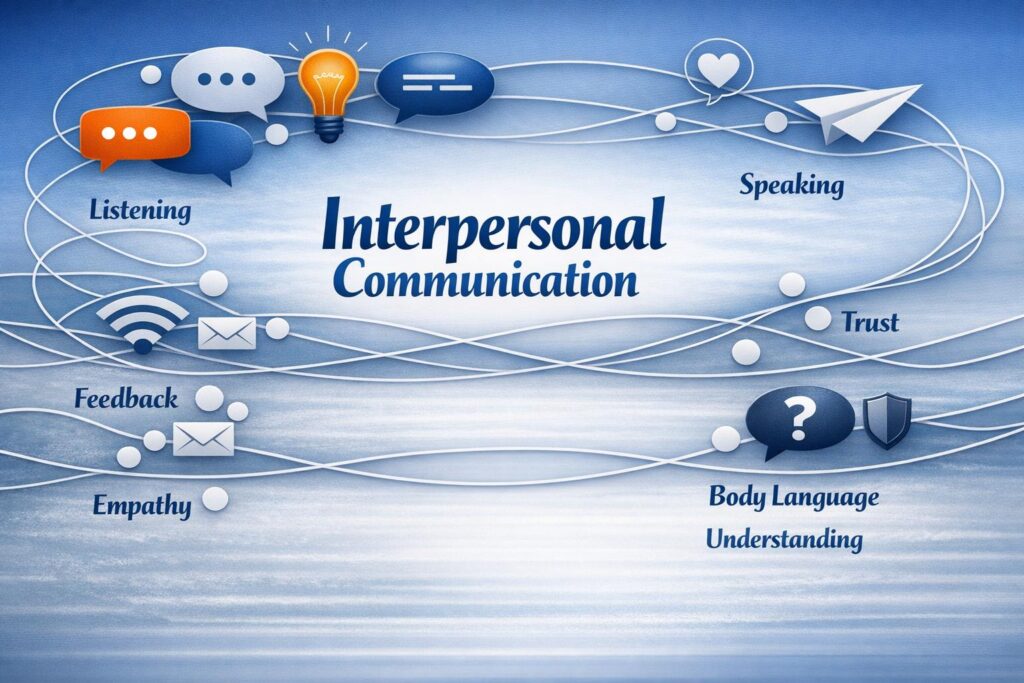
We often assume we know how to communicate—after all, we do it every day. Yet, how often do misunderstandings still occur . Interpersonal communication encompasses everything from a shared smile to a heated debate; it is the vital currency of our social existence.
At its core, communication serves a myriad of functions. It allows us to fulfil social needs—the desire for affection, inclusion, and control. It shapes our identity, as we refine our self-concept through the eyes and reactions of others. Beyond these psychological facets, it is how we share information, navigate conflicts, and coordinate our actions with others. Simply put, our ability to communicate effectively underpins nearly all aspects of human life.
Understanding Interpersonal Communication
In the interpersonal arena, we must shift our perspective from a simple transactional model where messages move linearly from sender to receiver. While convenient, this ignores the complexity of the human interaction. We simultaneously act as both sender and receiver, constructing a shared meaning through continuous feedback loops. The effective communicator, therefore, is not just a skilled speaker, but a profound listener and observer.
Barriers to Interpersonal Communication
1. Physical Barriers are external factors that interfere with the communication process. Noise, poor lighting, and uncomfortable environments can distract individuals and reduce their ability to focus on the message. Additionally, visual obstructions, such as barriers or improper seating arrangements, prevent nonverbal cues from being noticed, which affects the full transmission of meaning.
For example, too many conversations in a meeting can make communication very difficult.
Physical barriers can be removed by making a comfortable and Nosie free environment by minimising distractions.
2. Psychological Barriers arise from internal states that affect a person’s willingness or ability to communicate clearly. Stress, anxiety, and anger often cloud judgment and hinder open dialogue.
For example, in a project meeting, when a team member feels criticized, they may become defensive and stop contributing—leading to breakdown in communication
Prejudices and personal biases also distort message interpretation. If a person holds preconceived notions about the speaker, they might dismiss or misinterpret what is said. Emotional disruptions can result in selective listening, where only parts of the conversation are acknowledged, leading to misunderstandings or conflicts.
3. Semantic Barriers occur when the meaning of words or symbols differs between sender and receiver. Language differences, jargon, slang, or complex terminology can confuse the listener. For instance, technical terms used in specialized fields may be meaningless to someone without that background.
Ambiguity and poor word choice also create gaps in understanding. The same word can have multiple meanings depending on context or cultural background, which can cause misinterpretation. Clarifying language and using simple, precise expressions help reduce this barrier.
4. Cultural Barriers stem from differences in values, beliefs, customs, and communication styles between individuals from diverse backgrounds. These disparities can lead to misunderstandings if norms regarding personal space, eye contact, or tone are not respected.
Language nuances and nonverbal communication vary widely across cultures, which can create confusion or offense. Cultural stereotypes and prejudices intensify these issues by fostering mistrust or assumptions. Awareness and sensitivity to cultural differences are essential for effective interpersonal communication in diverse settings.
The Strategies of Interpersonal Communication
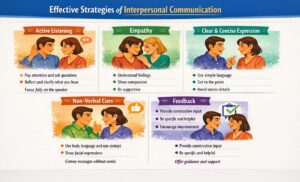
Strategies of interpersonal communication are the techniques and methods used to effectively share information and build connections with others. These strategies encompass skills such as active listening and clear verbal communication and include understanding non-verbal cues and demonstrating empathy. The goal is to improve the quality of interactions, making them more meaningful and effective.
- Active Listening: Focusing completely on the speaker to understand the message accurately.
- Empathy: Understanding and sharing another person’s feelings.
- Clear & Concise Expression: Communicating ideas simply and directly without unnecessary details.
- Non‑Verbal Cues: Communicating messages through body language, eye contact, and expressions.
- Feedback: Providing helpful responses to encourage understanding and improvement.
Employing different strategies as needed can lead to more effective interactions in diverse environments
- Adaptability: Adapting your communication style to suit different situations and people is a valuable strategy in interpersonal communication. This involves being flexible and responsive, enhancing the effectiveness of your interactions.
- Conflict Resolution: Managing disagreements constructively is a crucial strategy in interpersonal conflict communication. Effective conflict resolution involves maintaining respect and understanding, essential for preserving positive relationships.
- Cultural Sensitivity: Understanding and respecting cultural differences in communication styles is vital in today’s globalized society. This strategy is crucial in culture interpersonal communication, involving being aware of and adapting to various cultural norms and communication styles.
Conclusion
In a world where collaboration is key, mastering interpersonal communication is not optional—it is essential. Continuous practice, self-assessment and feedback can help master interpersonal communication