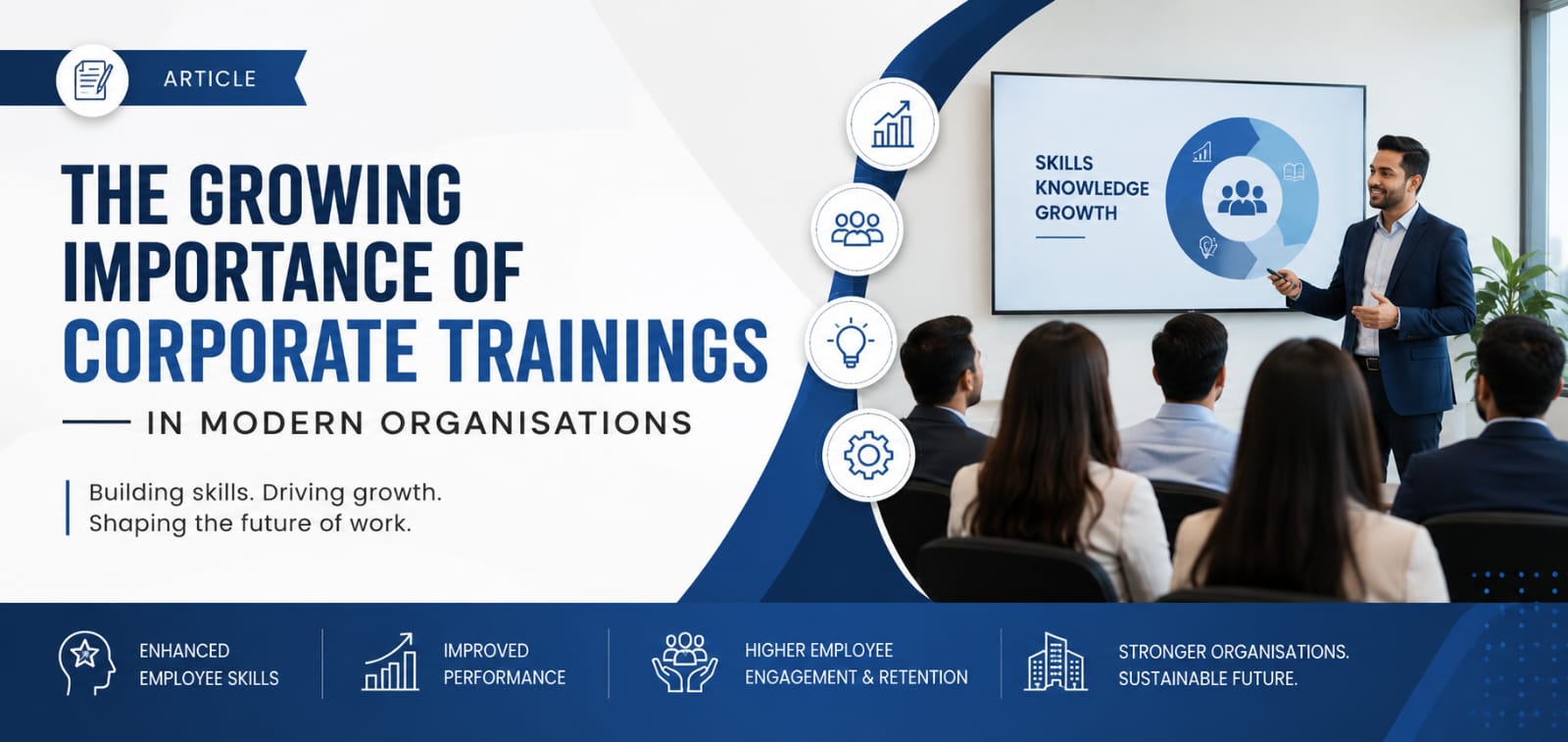

In today’s fast-changing business environment, organizations are constantly facing new challenges, technologies, and customer expectations. To remain competitive and productive, companies must continuously invest in their employees’ growth and development. This is where corporate training plays a vital role.
Corporate training is more than just teaching employees new skills. It is a strategic process that improves performance, builds confidence, enhances productivity, and prepares organizations for future challenges. Companies that prioritize employee learning often experience better engagement, stronger teamwork, and improved business outcomes.
What is Corporate Training?
Corporate training refers to structured learning programs designed to improve employees’ professional skills, knowledge, and workplace behaviour. These programs help employees perform their roles more effectively while supporting organizational goals.
Corporate training can cover various areas such as:
- Leadership development
- Communication skills
- Sales and marketing
- Time management
- Customer service
- Team building
- Emotional intelligence
- Technical and digital skills
Training programs may be conducted through workshops, seminars, online learning, coaching sessions, or interactive activities.
Why Corporate Training is Important
- Improves Employee Performance
Training equips employees with updated knowledge and practical skills. When employees understand their roles clearly and learn effective techniques, their productivity and efficiency improve significantly.
Well-trained employees can:
- Complete tasks confidently
- Solve problems effectively
- Adapt to workplace changes
- Deliver better results
This directly contributes to organizational success.
- Enhances Employee Confidence
Employees who receive proper training feel more capable and motivated. Training boosts confidence by helping them understand their strengths and improve weak areas.
Confident employees tend to:
- Communicate better
- Take initiative
- Handle responsibilities effectively
- Contribute positively to the workplace culture
- Encourages Continuous Learning
In today’s competitive world, learning cannot stop after formal education. Corporate training creates a culture of continuous learning within organizations.
Employees become more open to:
- New technologies
- Innovative ideas
- Industry trends
- Professional development opportunities
This mind-set helps organizations stay future-ready.
- Strengthens Leadership Skills
Leadership training is one of the most valuable aspects of corporate learning. Organizations need leaders who can inspire teams, manage challenges, and make effective decisions.
Leadership development programs help professionals improve:
- Decision-making
- Team management
- Conflict resolution
- Communication
- Strategic thinking
Strong leadership creates stronger organizations.
- Improves Employee Retention
Employees value organizations that invest in their growth. Companies offering learning and development opportunities often experience higher employee satisfaction and retention.
When employees feel valued, they are more likely to remain loyal and committed to the organization.

Types of Corporate Training
- Technical Training
Focuses on job-specific technical skills and software knowledge.
- Soft Skills Training
Develops communication, teamwork, leadership, and interpersonal skills.
- Sales Training
Helps employees improve customer interaction, negotiation, and selling techniques.
- Compliance Training
Educates employees about workplace policies, ethics, and legal regulations.
- Diversity and Inclusion Training
Promotes respect, collaboration, and an inclusive workplace culture.

Modern Trends in Corporate Training
Corporate learning methods are evolving rapidly with technology and changing work environments. Some modern trends include:
- Virtual instructor-led training
- E-learning platforms
- Micro learning modules
- Gamification
- AI-based learning tools
- Hybrid training models
These approaches make learning more flexible, engaging, and accessible.
Challenges in Corporate Training
Despite its benefits, organizations may face challenges such as:
- Limited employee participation
- Time constraints
- Budget limitations
- Lack of practical implementation
- Measuring training effectiveness
To overcome these issues, organizations should focus on customized, interactive, and outcome-based training programs.
Role of Trainers in Corporate Learning
Corporate trainers play a significant role in employee development. A successful trainer not only shares knowledge but also inspires, motivates, and engages learners.
Effective trainers:
- Understand audience needs
- Use interactive methods
- Encourage participation
- Provide practical examples
- Create a positive learning environment
A skilled trainer can transform an ordinary session into a meaningful learning experience.
Conclusion
Corporate training is an essential investment for every organization aiming for long-term success. It helps employees grow professionally while improving organizational performance and workplace culture.
In a constantly evolving business landscape, companies that prioritize learning and development gain a competitive advantage. Training empowers employees, strengthens leadership, improves productivity, and creates a culture of continuous improvement.
Ultimately, corporate training is not just about enhancing skills — it is about unlocking human potential and building stronger, smarter, and future-ready organizations.