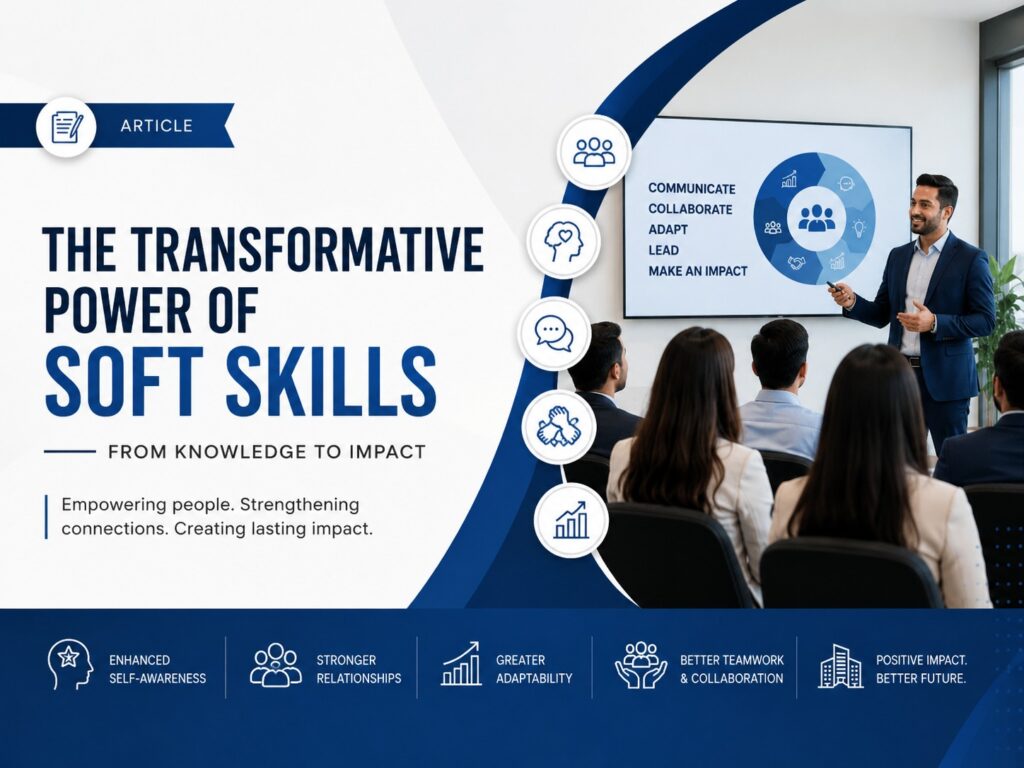

During a training session, I once met a participant who was exceptionally knowledgeable in his field. He understood his work thoroughly, consistently delivered quality results, and possessed the technical expertise required to excel in his role. However, whenever he was asked to present his ideas, contribute to group discussions, or interact with senior stakeholders, he became hesitant and withdrawn. His knowledge was undeniable, yet his inability to communicate confidently often prevented his ideas from receiving the attention they deserved. Over time, through focused development in communication, active listening, confidence-building, and self-awareness, he transformed into one of the most effective contributors in his organization. His journey highlighted an important truth: success is not determined solely by what we know, but also by how effectively we engage with others. This is where the significance of soft skills becomes evident.

In an era where technology is advancing rapidly and industries are constantly evolving, technical expertise alone is no longer sufficient to guarantee professional success. Organizations today seek individuals who can not only perform tasks efficiently but also collaborate, communicate, and adapt to changing environments. These capabilities are collectively known as soft skills. Soft skills are the interpersonal, behavioural, and emotional competencies that influence how individuals interact with others and navigate various situations. They include communication, emotional intelligence, teamwork, adaptability, leadership, problem-solving, critical thinking, time management, and conflict resolution. Unlike technical skills, which are often role-specific, soft skills are transferable and relevant across industries, professions, and stages of life.
What makes soft skills particularly valuable is that they influence nearly every interaction we have. They determine how we respond to challenges, build relationships, manage emotions, and contribute to collective goals. While technical skills may help an individual perform a task, soft skills determine how effectively that task is carried out within a team, an organization, or a broader professional environment. They are the skills that transform expertise into impact and knowledge into influence.
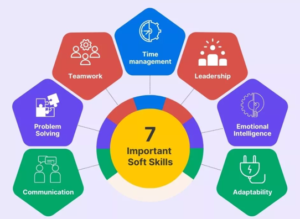
The application of soft skills can be observed in countless everyday situations. Effective communication, for instance, is not simply about speaking well; it involves listening actively, understanding perspectives, and conveying ideas with clarity and confidence. A professional who communicates effectively can reduce misunderstandings, build trust, and foster stronger relationships. Similarly, emotional intelligence enables individuals to recognize and manage their own emotions while understanding the emotions of others. This skill becomes particularly important during difficult conversations, conflict situations, or periods of organizational change.
Adaptability is another critical soft skill that has gained significance in today’s dynamic workplace. Change has become a constant feature of professional life, whether through technological advancements, shifting market demands, or evolving organizational structures. Individuals who demonstrate flexibility and resilience are better equipped to embrace change, learn new skills, and remain productive in uncertain circumstances. Rather than viewing change as a disruption, they see it as an opportunity for growth and development.
Teamwork and collaboration are equally important in modern organizations. Few roles operate in complete isolation. Employees are increasingly expected to work across departments, cultures, and functions to achieve shared objectives. The ability to collaborate effectively, respect diverse viewpoints, and contribute positively to team dynamics can significantly influence overall organizational performance. Strong teamwork not only improves productivity but also creates a more inclusive and supportive work environment.
Leadership, often misunderstood as a skill reserved for managers, is another essential soft skill. Leadership is fundamentally about influence rather than authority. It involves motivating others, taking initiative, demonstrating accountability, and guiding teams toward common goals. Whether an individual is leading a project, mentoring a colleague, or driving a new initiative, leadership skills enable them to create a positive impact regardless of their formal position.
The growing emphasis on soft skills reflects a broader understanding of what drives success in today’s workplace. Organizations do not thrive solely because of systems, processes, or technologies; they thrive because of people. Technical competencies can often be taught and updated as industries evolve. However, the ability to communicate effectively, build meaningful relationships, solve problems collaboratively, and adapt to changing circumstances remains a distinguishing factor among high-performing professionals. Employers increasingly recognize that these human-centered skills contribute directly to employee engagement, customer satisfaction, innovation, and long-term organizational growth.
Beyond professional success, soft skills play a vital role in personal development. They help individuals build confidence, strengthen relationships, manage stress, and approach challenges with a constructive mindset. They encourage self-awareness, empathy, and continuous learning—qualities that contribute not only to career progression but also to overall well-being. In many cases, the barriers individuals face are not due to a lack of knowledge but rather limitations in communication, confidence, or interpersonal effectiveness. Soft skills help bridge this gap.
Conclusion
Soft Skills are far more than complementary abilities; they are essential competencies that shape how individuals connect, collaborate, and succeed in an increasingly interconnected world. While technical skills may open doors, soft skills determine how effectively individuals navigate the opportunities that lie beyond them. As workplaces continue to evolve and human interaction remains central to organizational success, investing in the development of soft skills becomes not just beneficial but necessary. They are the skills that transform professionals into leaders, colleagues into collaborators, and potential into meaningful, lasting impact.