
Introduction
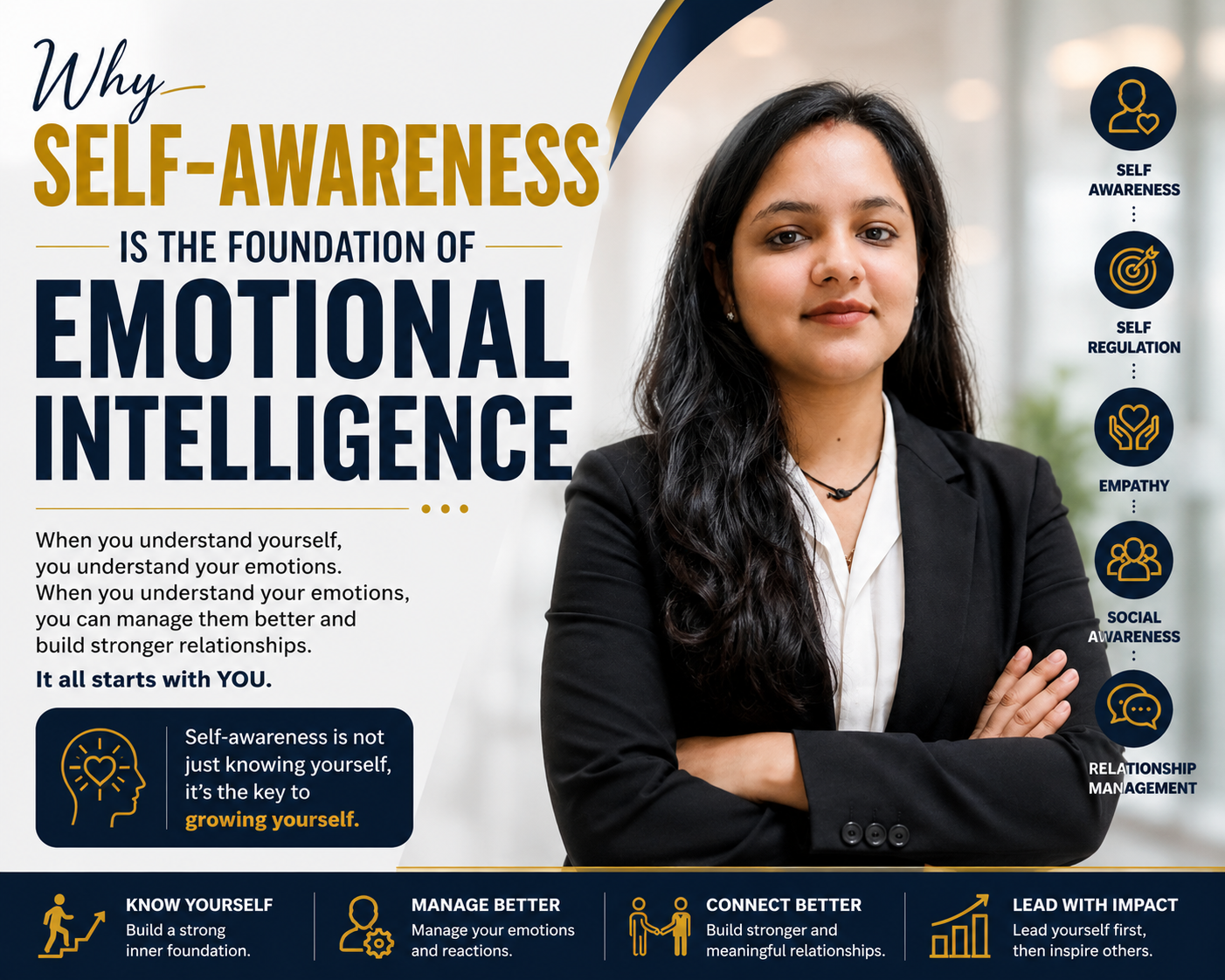
In today’s workplace, technical skills and qualifications are important, but they are not enough. Employers also value people who can communicate well, work with others, handle stress, and solve problems calmly. These qualities come from Emotional Intelligence (EI), and the first step to developing Emotional Intelligence is self-awareness.
Self-awareness means understanding your emotions, thoughts, strengths, weaknesses, and how your behaviour affects the people around you. When you know yourself well, you can respond to situations wisely instead of reacting emotionally.

What Is Self-Awareness?
Self-awareness is the ability to recognize what you are feeling and understand why you feel that way. It helps you stay in control of your emotions and actions.
Example: Imagine your manager points out a mistake in your report during a meeting. Your first reaction might be to feel embarrassed or upset. A self-aware person notices these emotions, stays calm, listens carefully, and uses the feedback to improve. Instead of arguing, they see it as an opportunity to learn.
Why Is Self-Awareness Important?
- It Helps You Control Your Emotions
Everyone experiences emotions like happiness, stress, frustration, and excitement. The important thing is how we manage them.
When you are self-aware, you recognize your emotions before they control your actions.
Example: A customer speaks rudely to an employee. Instead of responding with anger, the employee takes a deep breath, remains polite, and resolves the issue professionally. This shows emotional control.
- It Helps You Make Better Decisions
Our emotions can influence our decisions. If we act without thinking, we may make mistakes.
Self-awareness allows us to pause, think clearly, and make balanced decisions.
Example: A team leader is under pressure to finish a project quickly. Instead of making rushed decisions, they evaluate the situation, discuss it with the team, and choose the best solution. This leads to better results.
- It Builds Stronger Relationships
Good relationships are built on trust, respect, and understanding.
When you understand your own emotions, it becomes easier to understand how others feel. You communicate more respectfully and listen with patience.
Example: Two colleagues disagree on a project. Instead of blaming each other, one employee listens carefully, understands the other person’s point of view, and works together to find a solution. This strengthens teamwork.
- It Supports Personal Growth
Self-aware people know that learning never stops. They accept feedback, learn from mistakes, and keep improving.
Example: An employee receives feedback that they need to improve their presentation skills. Instead of feeling discouraged, they attend a communication workshop, practice regularly, and become a more confident speaker.
This positive attitude helps them grow in their career.
- It Makes You a Better Leader
Great leaders understand both themselves and the people they lead. They stay calm during challenges and make thoughtful decisions.
Example: During a stressful deadline, a self-aware manager notices that the team is feeling overwhelmed. Instead of putting more pressure on them, the manager offers support, adjusts priorities, and motivates the team. As a result, employees feel valued and perform better.

How to Improve Self-Awareness
Self-awareness is a skill that anyone can develop with practice.
Here are some simple ways to improve it:
- Take a few minutes every day to reflect on your emotions.
- Ask for honest feedback from colleagues or friends.
- Listen more and avoid reacting immediately.
- Think before you speak during difficult situations.
- Write your thoughts in a journal.
- Practice mindfulness or deep breathing to stay calm.
Small daily habits can create big improvements over time.
Conclusion
Self-awareness is the foundation of Emotional Intelligence because it helps us understand ourselves before we understand others. It allows us to manage emotions, make better decisions, build stronger relationships, and continue learning every day.
Whether you are an employee, manager, or leader, developing self-awareness will help you become more confident and successful. Remember, the journey to Emotional Intelligence begins with knowing yourself.