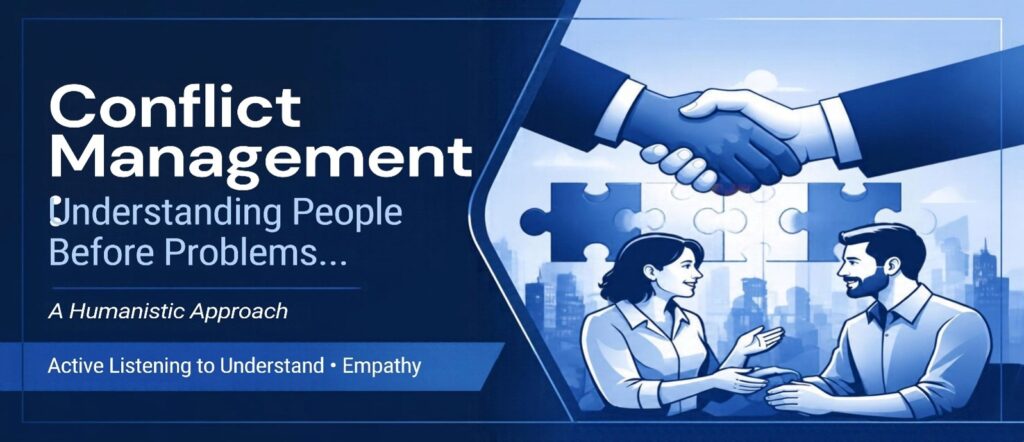

Conflict in the workplace is rarely about the issue on the surface. More often, it is about dignity, recognition, and the deeply human need to feel valued.
A recent interaction between two colleagues, Ananya and Rishi, reminded me of this truth — and of the power a Humanistic approach can bring into conflict resolution.
Ananya and Rishi had worked well together for years, but a disagreement over a project deadline created an unexpected rift. Emails became curt, collaboration slowed, and tension quietly spread across the team. The deadline wasn’t the real problem. The emotional undercurrent was.
When their manager, Meera, invited them for a conversation, she didn’t begin with solutions or corrective action. She began with presence. Her intention was simple: listen to understand, not to respond.
As both colleagues shared their perspectives, the deeper layers emerged. Rishi felt unseen in his effort and overwhelmed by competing priorities. Ananya felt dismissed and worried that her commitment was being taken for granted.
Meera didn’t rush to fix anything. She acknowledged their experiences with a single sentence that shifted the tone of the room: “I can see why this mattered to both of you.”
That moment of recognition softened defensiveness. It opened a door that logic alone could not. For the first time in days, they saw each other not as opponents in a disagreement, but as humans navigating pressure, expectations, and emotions.
What followed was collaboration — not because the conflict disappeared, but because they felt heard. Together, they rebuilt clarity, trust, and a shared plan forward.
🌿 The Humanistic Lens
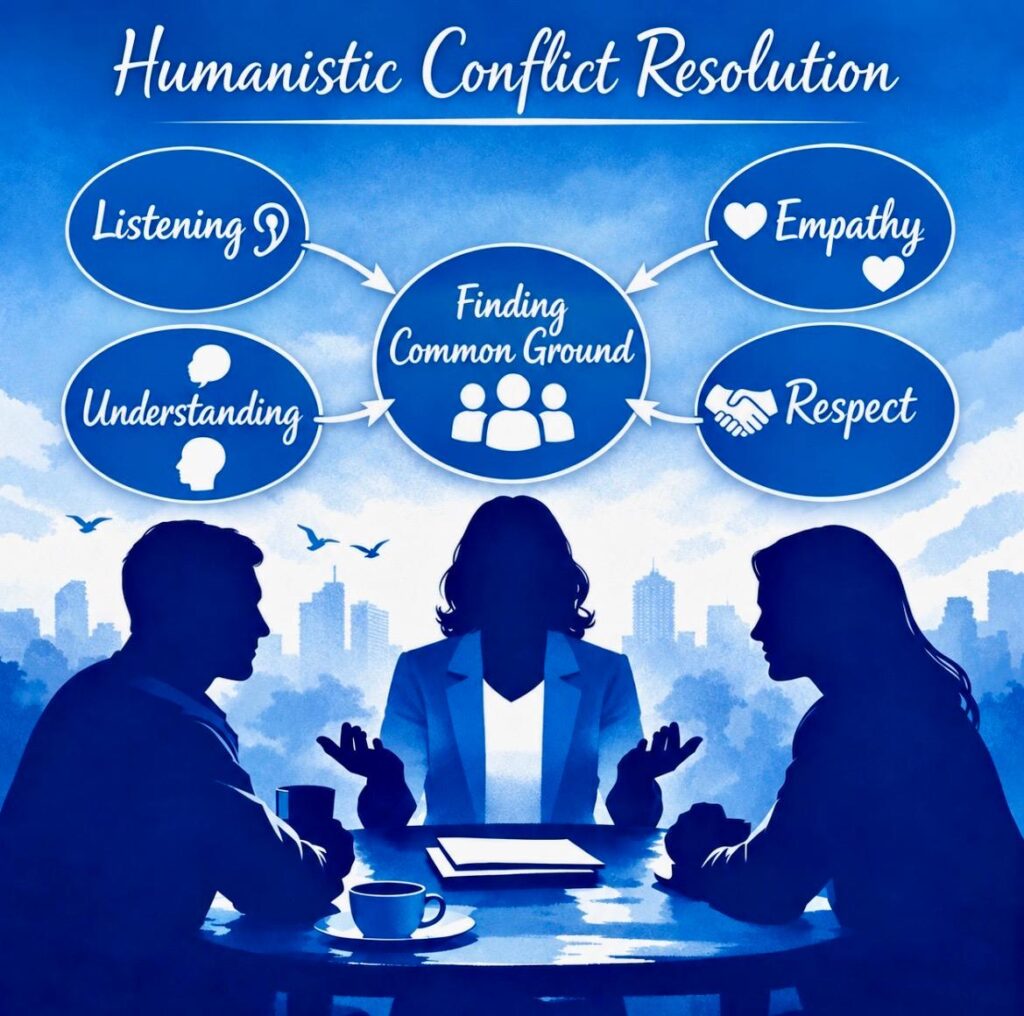
Humanistic conflict resolution is not about authority or control; it is about connection. It recognizes that beneath every disagreement lies an emotional need — to be respected, understood, and acknowledged. When leaders approach conflict through empathy and active listening, they transform tension into trust.
This approach begins with listening to understand !!!
Listening without interruption, without preparing a counterargument, and without judgment creates emotional safety — the foundation of resolution. Often, the moment someone feels heard, the conflict loses half its weight.
Empathy follows naturally. It doesn’t mean agreement; it means acknowledgment. Simple phrases can shift the entire tone of a conversation:
- “I can see why this matters to you.”
- “Thank you for sharing your perspective.”
- “Let’s find a way forward together.”
Empathy transforms conflict from confrontation into collaboration. It signals respect, reduces defensiveness, and opens the door to shared solutions.
💡 The Data Behind Humanity
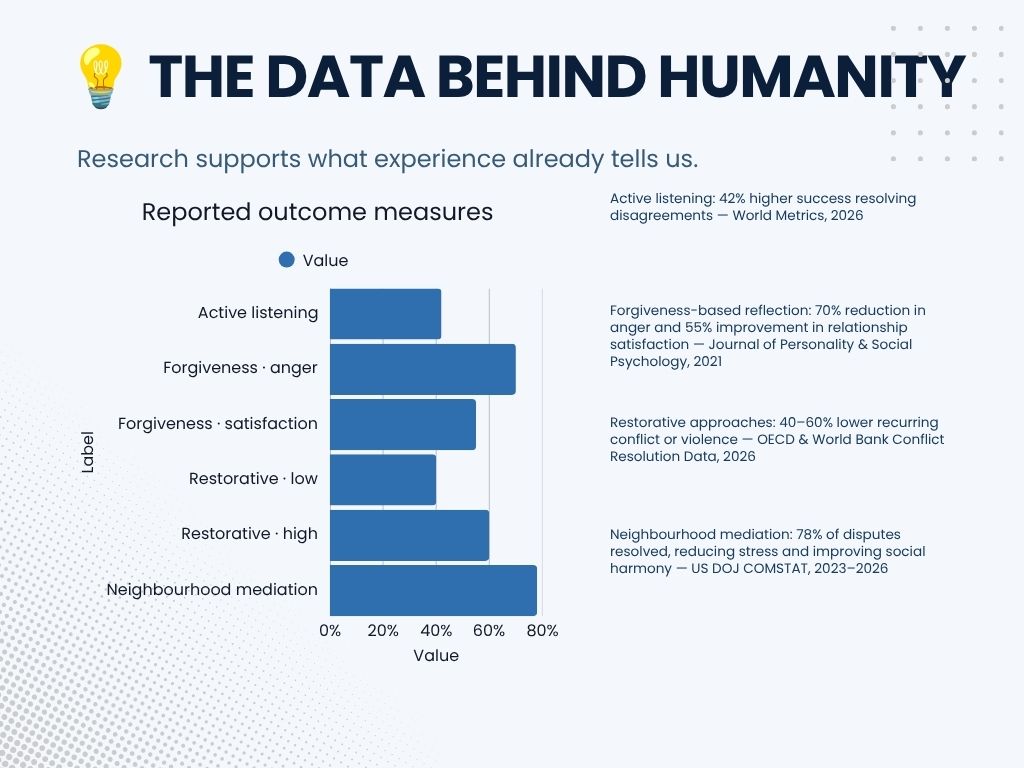
These numbers reinforce a powerful truth: conflict is deeply human — and when approached with empathy, it becomes profoundly manageable.
🤝 The Leadership Takeaway
Leaders often feel pressure to “fix” conflict quickly. Yet, the most effective resolution doesn’t come from authority; it comes from understanding. A humanistic leader doesn’t rush to impose solutions. They create space for dialogue, listen deeply, and validate emotions before moving to action.
When people feel heard, they stop defending and start collaborating. When they feel understood, they stop resisting and start rebuilding. And when empathy enters the room, resolution becomes inevitable.
Humanistic conflict resolution is not a soft skill — it’s a strategic one. It builds psychological safety, strengthens relationships, and enhances team performance. It turns disagreement into discovery and tension into transformation.
🌱 The Turning Point
Conflict doesn’t dissolve through logic or hierarchy. It dissolves through HUMANITY!!!
When people feel understood, resolution becomes not just possible — it becomes natural. The turning point in any conflict is not the moment of agreement, but the moment of understanding. That’s when hearts open, communication flows, and collaboration begins.
In a world that often rewards speed and efficiency, slowing down to listen may seem counterintuitive. Yet that pause—a moment of empathy—is exactly what changes everything.
Because every conflict carries within it the seed of connection. And when we choose to nurture that seed with understanding, we don’t just resolve issues — we restore relationships.
Reflection
When was the last time you paused to truly listen — not to respond, but to understand — in the middle of a conflict?