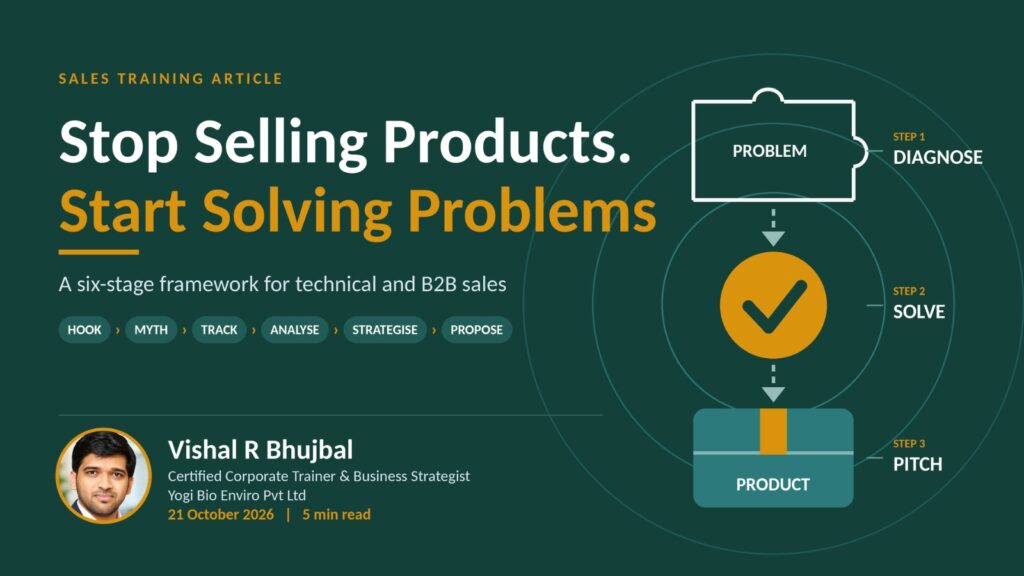

A six-stage consultative sales framework for technical and B2B businesses
HOOK → MYTH → TRACK → ANALYSE → STRATEGISE → PROPOSE
Sales is often considered the ability to convince a customer to buy a product or service. In technical and B2B industries, effective sales is much more than persuasion.
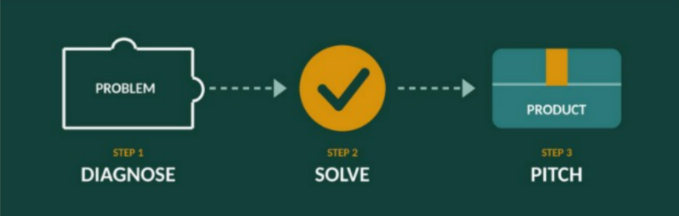
It is about understanding a customer’s problem, creating value, developing trust and providing a solution that makes business sense.
My experience in business development, waste management, renewable energy, biomass, technical projects and consulting has taught me that customers rarely buy a product simply because it is technically good. They buy when they understand how the solution will solve their problem, reduce their risk or create measurable value.
Customers rarely buy a product simply because it is technically good.
That is why I propose a practical six-stage sales training model: HOOK → MYTH → TRACK → ANALYSE → STRATEGISE → PROPOSE.
STAGE 1HOOK – Get the customer’s attention |
The first challenge in sales is not selling; it is getting the customer’s attention. A salesperson should not begin with “Let me explain our product.” Begin with the customer’s problem.
Instead of: “We provide waste-management solutions.”
Ask: “How much are you currently spending to manage your waste, and how much value are you losing from that waste?”
A strong hook creates curiosity and makes the customer think about an existing problem. Learn to communicate through problem statements, questions and business outcomes, rather than product features.
STAGE 2MYTH – Challenge the customer’s assumptions |
Every customer carries assumptions. They may believe that a cheaper solution is always better, that changing suppliers is risky, that technology is too expensive, or that their current system is already efficient.
A good salesperson does not argue. Instead, they ask questions and use facts, calculations, examples and case studies to help the customer reconsider.
Ask: “Is the cheapest waste-processing solution actually the lowest-cost solution when downtime, manpower, implementation support and disposal costs are included?”
This converts the sales conversation from price comparison to value comparison.
STAGE 3TRACK – Measure every stage of the sales funnel |
Sales cannot be managed effectively without tracking. Follow leads generated, leads qualified, first meetings, site visits, proposals submitted, negotiations, follow-ups, conversions, average sales value, sales-cycle duration and reasons for lost opportunities.
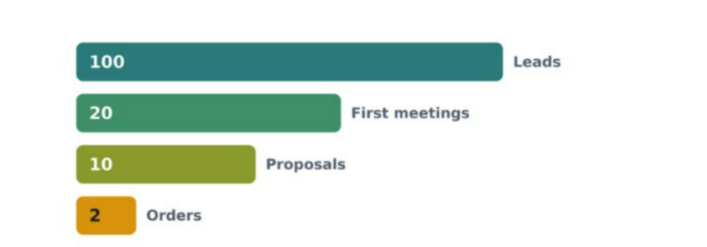
Tracking shows where opportunities get stuck. In this example the problem may not be lead generation at all. It may be qualification, proposal quality, pricing, follow-up or closing.
STAGE 4ANALYSE – Convert sales data into intelligence |
Tracking produces numbers; analysis produces decisions. Analyse conversion rates, customer segments, product performance, geographic markets, competitors, pricing, and the reasons for winning or losing deals.
Tools such as Excel, Power BI, Tableau, SQL and AI help sales professionals find patterns and make data-driven decisions. The key question should always be:
What is the data telling me that my intuition is not?
STAGE 5STRATEGISE – Build the right solution strategy |
Analysis must finally lead to action. A sales strategy should answer five questions:
- Whom should we target?
- What problem will we solve?
- What value will we offer?
- Why should the customer choose us?
- What is our next action?
For technical B2B sales, segment customers by need, urgency, budget, decision-making authority and potential lifetime value, then build a clear action plan for each priority account.
Most importantly, define the problem-solving approach before discussing price. The customer should understand what needs to change, why it needs to change, and what a successful outcome looks like.
STAGE 6PROPOSE – Present a problem-solving proposal |
The proposal is not merely a quotation. It converts the customer’s problem, the analysis and the agreed strategy into a clear business solution: attractive, easy to understand, and capable of becoming an eye-opener for the customer. A strong proposal clearly shows:
- The problem identified
- The proposed solution and scope of work
- Expected outcomes and measurable benefits
- Implementation approach, timelines and responsibilities
- The support and handholding that will be provided
When a customer compares your proposal only with a market price, respectfully bring the conversation back to the original problem. A price comparison answers “What does this cost?” It does not necessarily answer “Which solution will actually solve my problem?”
Handholding, implementation support, process guidance, monitoring, troubleshooting, training and relationship support are part of the value proposition. Position the proposal as a complete solution and support package, not a commodity quotation.
The objective is not to avoid the cost discussion. It is to ensure cost is judged against the full scope, outcomes, risks addressed and services included.
From “How much cheaper can you make this?” to “How effectively will this solve my problem, and what support will I receive?”
Conclusion
A successful sale is not about talking more. It is about asking better questions, understanding customer problems, demonstrating value, using data and presenting a solution the customer can clearly understand. The modern salesperson makes four shifts:
| Product seller | → | Problem solver |
| Intuition | → | Analysis |
| Price comparison | → | Value evaluation |
| One-time transaction | → | Long-term relationship |
HOOK challenges the problem. MYTH challenges assumptions. TRACK measures the funnel. ANALYSE explains the numbers. STRATEGISE defines the solution approach. PROPOSE presents a complete value proposition.
When these six disciplines become part of everyday sales behaviour, sales becomes a repeatable business process rather than an individual talent.
“Don’t sell what you have.Solve what the customer needs.” |