
Whenever we listen to experts about best tips to win at work place, one common hack or tip every one gives is “Communication”. Yes, definitely it is one of the most important part at work place. But what exactly is right communication. How can one be at their best in inter-personal communication? Let’s understand it through this article.
Communication at the workplace is often treated as a professional skill. It is something we use to share information, give instructions, discuss ideas or complete tasks. But interpersonal communication is much more than the words we exchange.
Every conversation at work involves people first and professionals second.
A colleague asking for help, an associate speaking to a manager, an employee approaching HR, a leader addressing the organisation, or an employee sharing an idea with the CEO – all of these interactions carry something beyond the information being communicated. They carry emotions, expectations, experiences, concerns and sometimes even fears.
This is where the human element in communication becomes important.
Imagine a colleague has missed an important deadline. A manager could say, “You have missed this deadline again. You need to be more responsible.” The message is clear, but the person receiving it may immediately become defensive.
Now consider a different approach:
“I noticed the deadline was missed. Is there something that made it difficult for you to complete it on time?”
The issue has not changed. The expectation has not changed either. But the approach has. The second conversation creates space for the person to explain, reflect and respond. It communicates accountability without removing empathy.
This is not about being overly soft at the workplace. This example is about understanding that how we communicate often determines how people receive what we communicate.
The same applies to peer-to-peer communication. A colleague may send a message saying, “You haven’t shared the report yet.” Another person may read it as a reminder. Someone else may perceive it as blame. A simple change to “Hey, I’m working on the next step. Could you share the report when you get a chance?” can completely change the tone of the interaction.
Small differences in communication can therefore influence relationships, collaboration and eventually the work itself.
The human element becomes even more significant when communication moves across levels of an organisation.
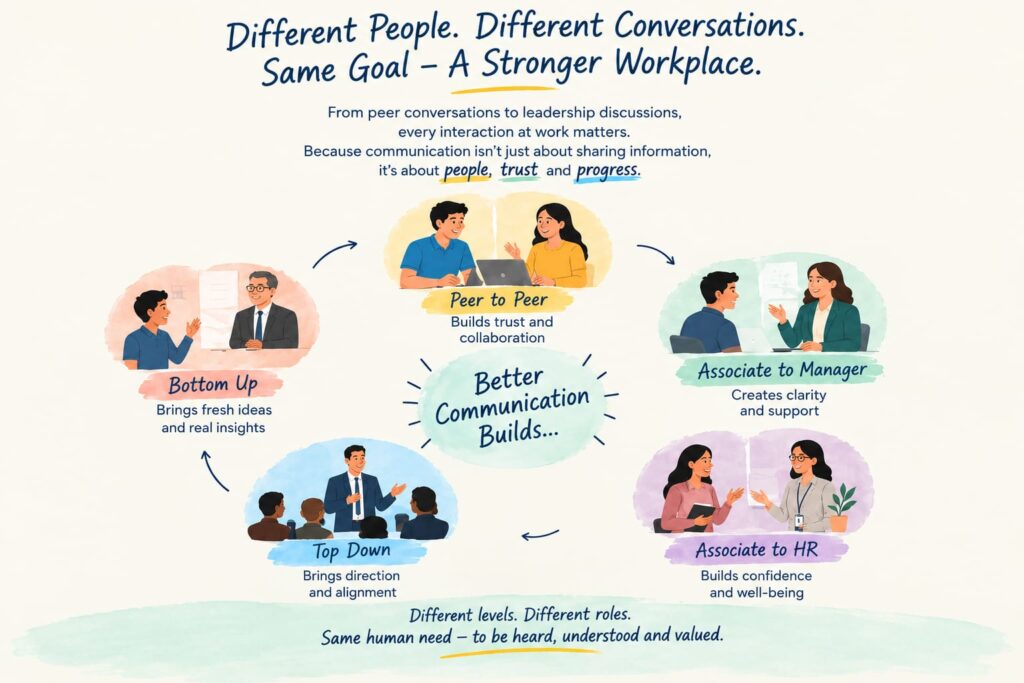
When someone approaches HR with a personal or workplace concern, they are not simply approaching a department, instead they are approaching another human being for support.
Similarly, communication from leadership travels much further than the words spoken in a meeting. A leadership message about a new change, target or organisational decision can either create clarity or create anxiety depending on how it is communicated.
And communication should not always be expected to flow only from the top down, because every organisation also needs the bottom-up voice – employees sharing ideas, concerns, observations and feedback with managers and leadership.
For example, a person sitting at the operational level may notice a customer problem, process gap or workplace challenge long before it reaches senior leadership. But, for this to happen, people must feel that their voice will be heard.
This becomes particularly important in meetings and boardrooms.
Having a good idea is one aspect, but communicating it effectively is another important aspect, because everyone comes with an idea, but what differs is how one delivers it.
For example, instead of saying, “This process is completely inefficient,” during a meeting, one could say, “I think there is an opportunity to simplify this part of the process.
The idea remains the same. But the second approach leaves room for discussion rather than resistance. This is why interpersonal communication has a direct connection with work culture.
A workplace where people can question respectfully, disagree without attacking, give feedback without humiliating, and listen without immediately judging is more likely to create meaningful professional relationships.
People may forget the exact words used in a conversation, but they often remember how the conversation made them feel. And,
- Being empathetic does not mean agreeing with everyone,
- Listening does not mean accepting every opinion, and
- Being respectful does not mean avoiding difficult conversations.
But it only means remembering that there is a person on the other side of every conversation.
As workplaces become increasingly technology-driven, communication tools may continue to evolve – emails, chats, video calls, AI and collaboration platforms. But no technology can completely replace the need to understand people.
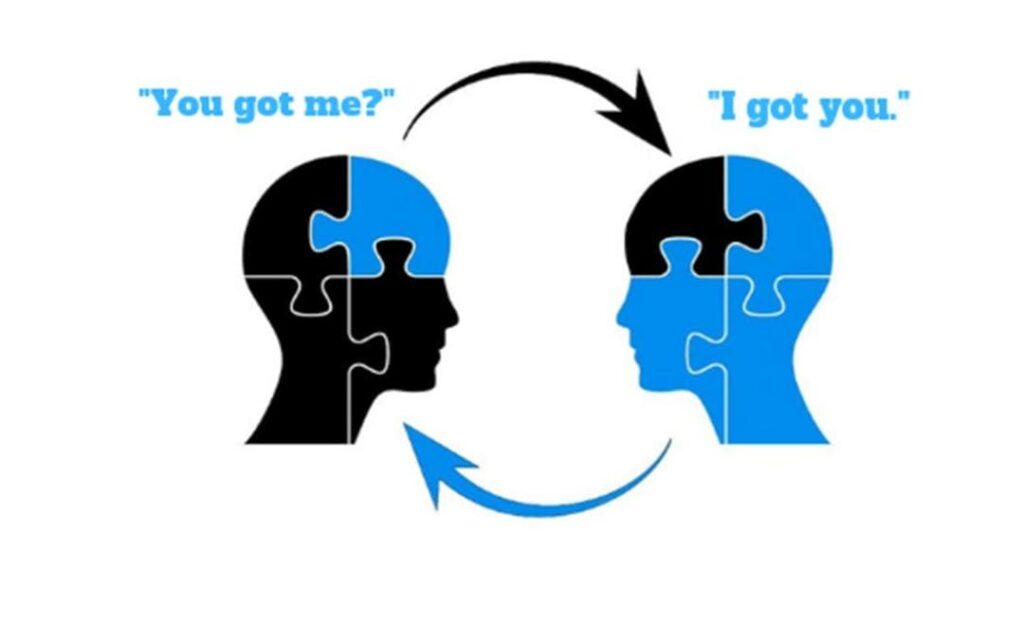
Whenever one communicates or speaks to other associate or HR or manager, one need to ask, “Did I communicate it in a way that the other person could understand, receive and respond to?”