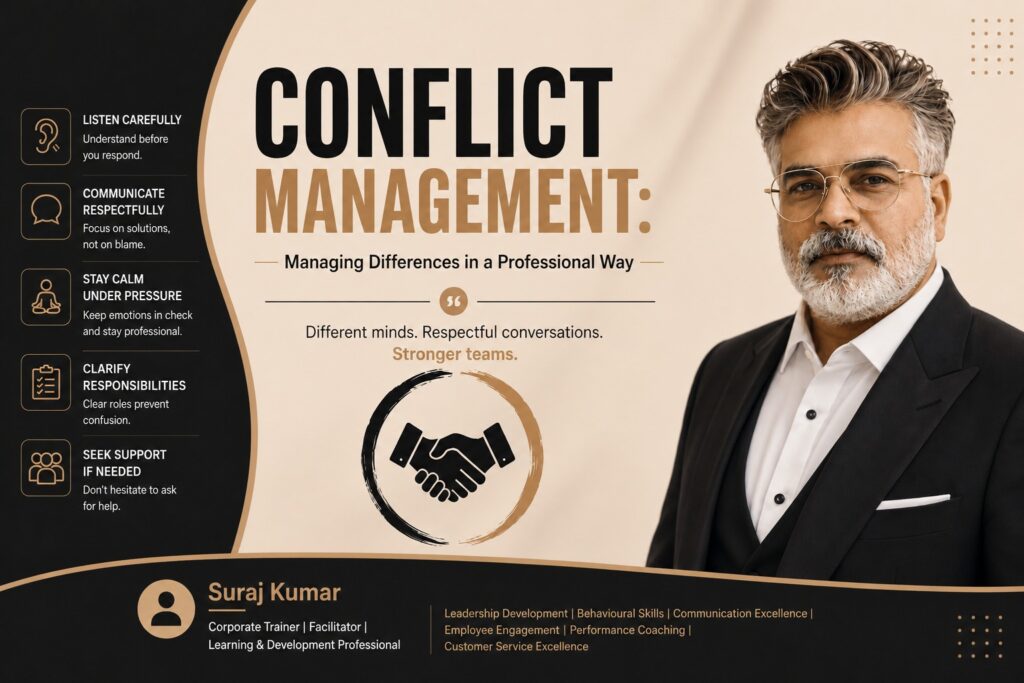

Conflict is a normal part of working life. Whenever people with different personalities, opinions, and ways of working come together, disagreements are naturally going to happen. Many people think workplace conflict is always negative, but that is not completely true. Sometimes disagreement can actually be helpful because it allows people to look at problems from different perspectives and come up with better solutions.
In reality, the main problem is usually not conflict itself, but how people deal with it. If misunderstandings are ignored or handled badly, teamwork suffers and relationships can become uncomfortable. However, when problems are handled calmly and respectfully, conflict can improve communication and even make a team stronger.

Common Causes of Workplace Conflict

- Poor Communication
One of the biggest causes of workplace conflict is poor communication. Sometimes instructions are unclear, deadlines are misunderstood, or expectations are not properly explained.
For example, one employee may think a report is due on Friday, while another assumes it is due the following week. Situations like this may seem small at first, but over time they can create frustration and confusion.
- Differences in Working Styles and Opinions
People naturally have different ways of working. One employee may prefer completing tasks quickly to meet deadlines, while another may focus more on details and accuracy.
Neither approach is completely wrong. The problem usually starts when people fail to understand or respect each other’s perspective. Different opinions can sometimes lead to disagreements, especially when priorities are different.
- Stress and Work Pressure
Stress also plays an important role in workplace disagreements. When deadlines increase and workloads become heavier, people often become less patient.
During stressful periods, even small things like a delayed email or a short reply can be misunderstood. In many situations, people are reacting more to pressure than to the actual issue itself.
- Unclear Responsibilities
Conflict may also happen when responsibilities are not clearly defined. If employees are unsure who is responsible for a task, confusion begins quickly.
This can lead to frustration, blame, or even repeated work. Many workplace problems become bigger simply because roles and responsibilities were not explained clearly from the beginning.

Why Conflict Is Not Always Negative
Although conflict is often seen as a bad thing, it is not always harmful. In fact, a workplace with no disagreement at all may not always be healthy.
Sometimes employees stay quiet just to avoid arguments, even when they have useful ideas or concerns. Respectful disagreement can encourage honest discussions and help teams make better decisions.

Ways to Manage Conflict Professionally
There are several ways employees can handle conflict in a professional manner. These conflict management techniques work best when they become habits, not one-time fixes:
- Listen carefully: Many problems become worse when people react too quickly without fully understanding the other person’s point of view.
- Communicate respectfully: Instead of blaming someone or trying to prove a point, it is better to focus on solving the problem together.
- Stay calm under pressure: Stress can make situations worse, so it is important to avoid emotional reactions.
- Clarify responsibilities: Making roles clear can prevent misunderstandings before they start.
- Ask for support if needed: If a conflict becomes difficult to solve, managers or team leaders can help both sides communicate fairly.

Conclusion
No workplace is completely free from disagreement, and that is perfectly normal. What matters most is how people respond when difficult situations happen. Teams that communicate openly, listen carefully, and treat one another with respect usually work better in the long run.
Conflict may be unavoidable, but when managed properly, it can become an opportunity for learning, improvement, and stronger teamwork.