
1. Overview of Conflict Management Training
Conflict management training equips individuals with essential skills — including active listening, negotiation, and emotional intelligence — to resolve workplace disputes constructively, enhancing productivity and fostering collaboration. Training covers identifying conflict stages, reducing escalation, and applying mediation strategies to create win-win outcomes.
1.1 Key Aspects
- Active Listening: Fully focusing on the speaker to understand their message and perspective before responding.
- Emotional Intelligence (EQ): Recognising personal emotional triggers and managing them while empathising with others’ feelings.
- Communication Strategies: Using “I” statements, defusing blame, and clear, assertive expression to prevent defensiveness.
- Negotiation & Mediation: Facilitating discussions, finding common ground, and creating win-win outcomes.
- De-escalation Techniques: Practical methods to remain calm and reduce tension in high-stakes or volatile situations.
- Learning Objectives: Understanding natural conflict styles, identifying triggers, managing emotional responses, and preventing escalation.
- Strategies: Interest-based bargaining, mediation, and proactive identification of issues before they become destructive.
- Outcomes: Improved team morale, enhanced productivity, and a more positive working environment.
2. Understanding Conflict
2.1 What Is Conflict?
Conflict is a state of opposition — a clash between seemingly incompatible elements. It occurs when goals, desires, values, or personalities come into friction, sparking feelings of frustration, tension, and potentially anger. However, conflict is not inherently negative; it can serve as a catalyst for change, pushing boundaries and generating new solutions.
3. Common Conflict Patterns in the Workplace
Every manager must develop adaptive conflict management skills to address the varied ways disputes surface. Three recurring patterns are particularly common:
- The Slow Broil: Conflicts that have built gradually over time. Most team members are aware of the tension, and the question becomes not “if” but “when” the situation will erupt. Prolonged stress of this nature can affect employee health and morale. Early intervention through training workshops can prevent escalation.
- The Big Bang: Sudden, unexpected conflicts that often catch people by surprise. While the contributing factors may have gone unnoticed, the eruption is highly disruptive to productivity and can fuel speculation and rumour. Conflict resolution training empowers employees to de-escalate and prevent such episodes.
- The Surprise: Conflicts that recur despite prior resolution efforts. This pattern underscores the importance of a shared organisational framework for conflict management, enabling teams to hold one another accountable.
Regardless of type, all three patterns can be mitigated through consistent application of conflict management tools and a culture of proactive communication.
4. Core Training Modules & Approaches
4.1 Training Focus Areas
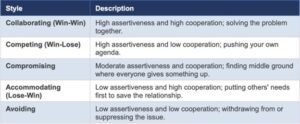
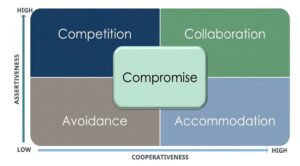
- Identifying Conflict Styles: Assessing how individuals typically respond to conflict (e.g., avoiding, accommodating, competing, collaborating, or compromising).
- Understanding Causes: Identifying differences in personalities, values, and communication styles that give rise to conflict.
- Stages of Conflict: Recognising the progression from initial disagreement to formal dispute.
- Managing Emotions: Developing emotional maturity and learning to respond thoughtfully rather than react impulsively to aggression.
- Scenario-Based Training: Using role-play, case studies, and simulations to practise resolution techniques in realistic settings.
- Effective Communication: Learning to articulate concerns in terms of behaviour, consequences, and feelings rather than blame.
5. Conflict Management Styles — Thomas-Kilmann Model
Most training programmes employ the Thomas-Kilmann Instrument (TKI) to help participants identify their natural response to conflict, based on the dimensions of assertiveness and cooperativeness. The five recognised styles are presented below.
6. Causes, Effects & Challenges
6.1 Causes of Workplace Conflict
Workplace conflict is typically caused by miscommunication, clashing personalities, unclear expectations, or competing priorities. When left unresolved, it can rapidly erode morale and create an environment characterised by stress, disengagement, and mistrust. Even minor conflicts can ripple through a team if not addressed promptly, leaving employees feeling unsupported and undervalued — resulting in decreased productivity, higher turnover, and burnout.
6.2 Common Resolution Challenges
Challenges in conflict resolution frequently include:
- Emotional Defensiveness: Individuals may become reactive rather than reflective under pressure.
- Lack of Trust: Pre-existing relational damage can impede open dialogue.
- Power Imbalances: Hierarchical differences may constrain honest communication.
- Differing Viewpoints: Divergent values and communication styles create misalignment.
- Poor Communication Habits: Deeply ingrained patterns of blame or avoidance are difficult to override.
These challenges can be addressed through structured frameworks, interactive exercises, and facilitator-led environments that promote empathy, clarity, and perspective-taking — laying the foundation for meaningful, lasting resolution.
7. Benefits for Organisations
Investing in conflict management training delivers measurable returns at both the individual and organisational level:
- Higher Productivity: Less time and energy is lost to disputes and interpersonal friction.
- Reduced Employee Turnover: A more respectful, collaborative culture promotes greater job satisfaction and retention.
- Stronger Leadership: Managers equipped with conflict management skills lead more effectively and inspire greater team confidence.
- Improved Communication: Training builds habits of open dialogue, active listening, and clear expression across the organisation.
- Legal Risk Mitigation: Early resolution of disputes helps prevent internal conflicts from escalating into formal grievances or legal proceedings.