
Introduction
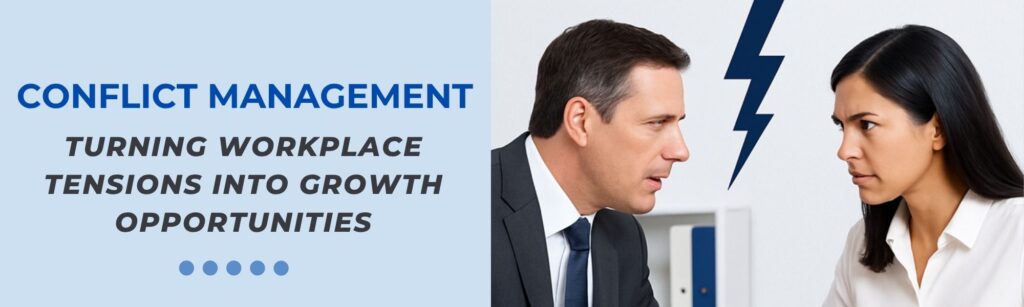
Conflict is a natural part of human interaction. Whenever people with different personalities, experiences,
expectations, opinions, and working styles come together, differences are bound to arise. In the workplace, conflict
may occur between colleagues, teams, managers, or even departments. Conflict itself is not always negative; when
handled constructively, it can encourage better ideas, stronger relationships, and meaningful organisational growth.
The real challenge is not avoiding conflict, but learning how to manage it professionally and respectfully.
Understand the Root Cause
Effective conflict management begins with understanding what is actually causing the disagreement. The visible
problem may only be a symptom of a deeper issue such as unclear communication, role confusion, unmet
expectations, limited resources, misunderstanding, or differences in priorities. Instead of immediately blaming
someone, a good professional asks questions, listens carefully, and gathers facts. Identifying the root cause
prevents temporary solutions and helps people work towards a lasting resolution.
Listen Before You Respond
One of the most powerful conflict-management skills is active listening. During a disagreement, people often
prepare their response instead of genuinely listening to the other person. Active listening means giving attention,
asking clarifying questions, acknowledging the other person’s concerns, and avoiding interruptions. A simple
statement such as, “I understand why this situation concerns you,” can reduce defensiveness and create space for
dialogue. Listening does not mean agreeing with everything; it means showing respect for another person’s
perspective.
Communicate with Respect
Words, tone, and body language can either reduce or intensify conflict. Professional communication focuses on the
issue rather than attacking the person. Instead of saying, “You never cooperate,” it is more constructive to say, “I
faced difficulty completing the task because I did not receive the required information on time.” Using calm language
and specific examples keeps the conversation solution-focused. Respectful communication protects dignity and
makes it easier for both sides to participate honestly.
Focus on Solutions
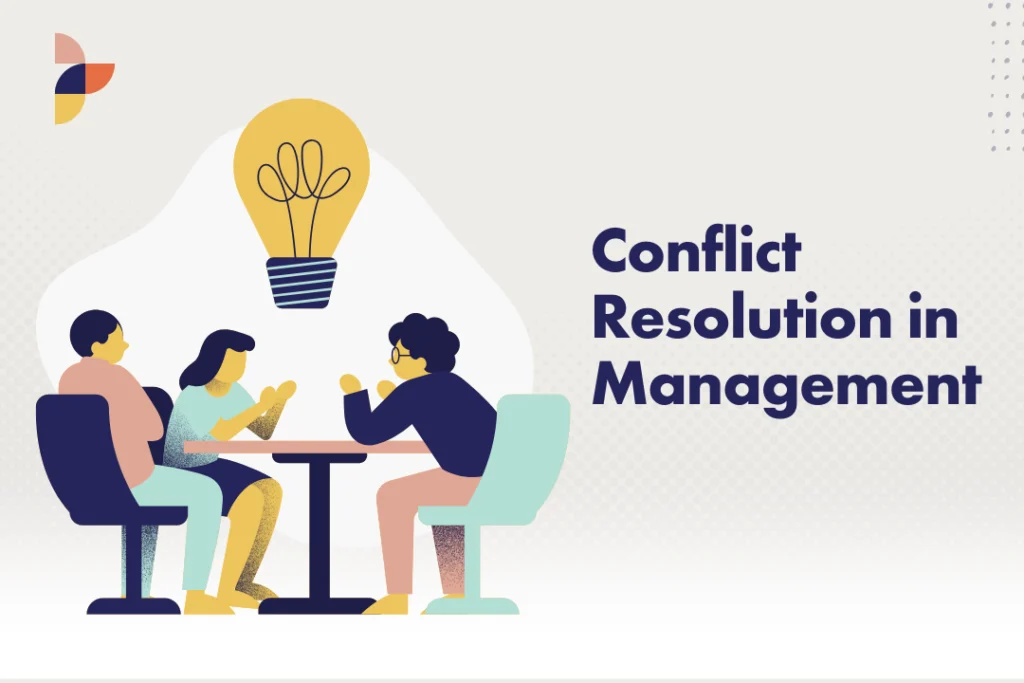
Successful conflict management should move the conversation from blame to solutions. Once both perspectives are
understood, identify areas of agreement and explore possible options. Ask questions such as: What can we
change? What would be fair to both sides? What can we do differently next time? A mutually acceptable solution
may require compromise, clarification of responsibilities, or a new process. The goal is not necessarily to prove who
is right; it is to find a practical way forward.
Manage Emotions
Emotions can strongly influence conflict. Anger, frustration, disappointment, or fear may cause people to react
impulsively. Taking a short pause before responding can prevent an unnecessary escalation. Professionals should
recognise their emotions without allowing them to control their behaviour. When a discussion becomes highly
emotional, it may be appropriate to pause and continue later when everyone is calmer. Emotional self-control
creates psychological space for rational thinking and respectful decision-making.
Build a Culture of Trust
Conflict management is not only about solving individual disagreements. Organisations can reduce destructive
conflict by building a culture of trust, transparency, empathy, and accountability. Clear expectations, regular
feedback, inclusive communication, and appreciation of different viewpoints help prevent misunderstandings.
Leaders and trainers can model respectful behaviour by remaining fair, approachable, and solution-oriented.
Conclusion
Conflict, when managed wisely, can become a learning opportunity rather than a barrier. It can reveal hidden
concerns, improve communication, strengthen teamwork, and encourage better decision-making. The essential
skills are active listening, empathy, respectful communication, emotional control, problem-solving, and a willingness
to understand different perspectives. A professional does not measure success by how many arguments they win,
but by how effectively they help people move from disagreement towards understanding and constructive action.