
“If your emotional abilities aren’t in hand, if you don’t have self-awareness, if
you are not able to manage your distressing emotions, if you can’t have
empathy and have effective relationships, then no matter how smart you are,
you are not going to get very far.”
— Daniel Goleman, Working with Emotional Intelligence (1998)
Emotional Intelligence: A Core Skill for the Modern Workplace
Technical knowledge may help a person secure a job, but the ability to understand
emotions, communicate effectively and manage relationships often shapes how well
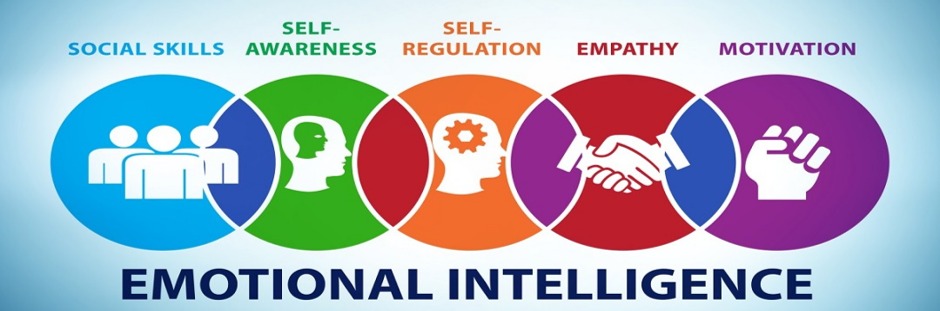
that person performs. These connected abilities are known as emotional intelligence
(EI). As workplaces become more collaborative, multicultural and technology-driven,
EI is increasingly recognised not simply as a “soft skill,” but as a professional
competency.
How Emotional Intelligence Emerged
Psychologists Peter Salovey and John D. Mayer introduced emotional intelligence
to scientific literature in 1990. They described it as the ability to perceive one’s own
and other people’s emotions, distinguish between them, and use this information to
guide thinking and behaviour. Their work addressed a limitation of traditional
measures of intelligence: IQ can assess aspects of cognitive ability, but it does not
fully explain how people handle stress, leadership responsibilities or relationships.
>Psychologist and science journalist Daniel Goleman brought the concept to a wider
audience through his 1995 book, Emotional Intelligence: Why It Can Matter More
Than IQ. Salovey and Mayer developed the concept; Goleman helped popularise it.
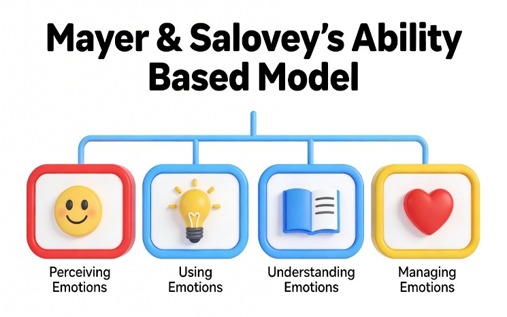
The Mayer–Salovey model describes four related abilities:
Perceiving emotions: Recognising
feelings through facial expressions, tone
and behaviour.
Using emotions: Drawing on feelings to
support attention, creativity and decision-
making.
Understanding emotions: Identifying
what causes emotions and how they may
change.
Managing emotions: Regulating one’s
feelings and responding constructively to
others.
Why EI Matters at Work
Work routinely brings deadlines, feedback,
misunderstandings and change. Employees with
strong EI are better equipped to recognise frustration
before reacting impulsively, consider another
person’s perspective and express disagreement
without unnecessarily harming a relationship.
These abilities can strengthen communication and
collaboration, support problem-solving, and
help teams manage conflict.
EI Contributes to Leadership and People Management:
Leaders who listen attentively, communicate
expectations clearly and respond thoughtfully to concerns are better positioned to
build trust and guide teams through uncertainty. For interns and early-career
employees, asking for feedback without becoming defensive, noticing when a
colleague needs support and contributing constructively in meetings can help
establish credibility before extensive technical experience has been gained.
By helping people understand their reactions and strengths, EI can also build
professional confidence and presence. It supports self-awareness, composure and
respectful communication—qualities that matter in interviews, presentations,
negotiations and everyday workplace interactions. EI does not replace cognitive
ability or technical expertise; rather, it can help people apply those strengths more
effectively. It may also support problem-solving by helping individuals stay open to
information, consider different viewpoints and focus on solutions instead of blame.
Research suggests a meaningful relationship between EI and workplace outcomes.
A 2011 meta-analysis covering 75 studies and 12,882 participants reported a
correlation of 0.28 between EI and job performance. A 2021 meta-analysis of 99
studies and 17,889 participants found predictive validity of 0.45, with results varying
by measurement and job context. A 2022 meta-analysis involving 78,159 participants
found positive associations between EI and job performance, job satisfaction,
organisational commitment and helpful workplace behaviour, and a negative
association with job stress. These findings show relationships, not proof that EI alone
causes success.
What Makes EI Training Effective?
Effective Emotional Intelligence training goes beyond theory. It encourages employees to practise
empathy, active listening, self-awareness and handling difficult situations through
role-play, case studies and reflection. Regular feedback and workplace application
help turn these skills into everyday behaviour.
Why is EI important in the age of AI?
>While AI and technology can improve efficiency,
automate tasks and support technical decision-making,
they cannot replace the human qualities that build
meaningful relationships. Empathy, compassion, trust,
wisdom and genuine human presence remain
essential in the workplace.
EI complements AI; it cannot be replaced by it.
>As technology takes over more tasks, organisations
must invest in developing the human skills that make
people effective, responsible and
compassionate professionals.
>Developing EI Over Time
Organisations that want to build these skills across teams can start with
corporate training programs that include emotional intelligence, communication and leadership.
EI develops through everyday practice: pausing under pressure, seeking feedback
and listening before responding. Reflecting on challenging conversations can help
identify emotional triggers and improve future responses.
As work changes, EI helps people collaborate effectively. It doesn’t replace
professional knowledge; it helps people apply it with greater awareness and
confidence.
By Elizabeth Christy
Certified Corporate Soft Skills Trainer