Say What You Mean: Interpersonal Communication That Works at Work
Picture the meeting. Everyone nods, the action points are agreed, and the call ends. A week
later, nothing has moved, two colleagues are quietly irritated, and someone says, “I thought
you meant something else.” Most workplace friction doesn’t come from a lack of talent or
effort. It comes from what goes unsaid, or what is heard differently from what was
intended.
What interpersonal communication really is
Interpersonal communication is the exchange of meaning between people through words,
tone, body language and, most importantly, listening. It is not a one-time skill you learn and
tick off. It is a daily habit, practised in every conversation, and it shapes trust everywhere, at
home and at work.
Why it matters in the corporate setup
In an organisation, communication is the infrastructure that everything else runs on. Teams
that communicate well tend to be more engaged, more productive and more likely to stay.
Teams that don’t pay for it quietly through rework, missed deadlines, duplicated effort and
unresolved conflict.
There is also a human cost. People speak up, share ideas and admit mistakes only when they
feel heard. This is the essence of psychological safety. Without it, problems stay hidden until
they become expensive.
Common communication gaps at work
A few patterns appear again and again:
Lost tone in text. A short email or chat message can read as cold, curt or critical,
even when none of that was intended.
Hierarchy barriers. Team members hesitate to challenge or clarify with senior
colleagues, so misunderstandings go uncorrected.
Hybrid and remote disconnect. Without hallway conversations, small clarifications
don’t happen, and assumptions fill the gap.
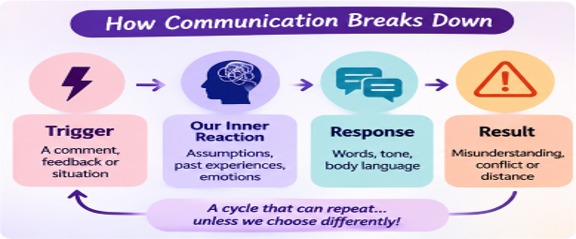
Reacting instead of responding. Under deadline pressure, we answer from stress
rather than from clarity, and a simple disagreement becomes a conflict.
Practical skills for professionals
The good news is that these gaps can be closed with a handful of simple practices.
Listen to understand, not to reply. Give the speaker your full attention, without drafting
your answer while they talk. Reflect back what you heard: “So the main concern is the
timeline. Is that right?”
Make clear, concise requests. State what you need, why it matters and by when. Vague asks
produce vague results.
Give feedback that is specific, timely and kind. “The report was great” helps little. “The
summary on page two made the decision easy” helps a lot. The same goes for corrective
feedback: describe the behaviour and its impact, not the person.
Read the non-verbal cues. Notice shifts in tone, silence, a withdrawn camera or a tightened
jaw. On video calls, these signals are subtler, so check in: “How is everyone feeling about
this?”
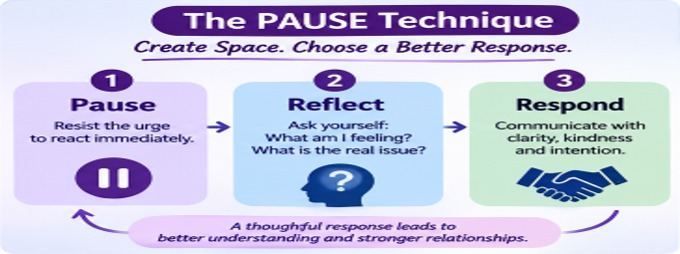
Pause before you respond. In a tense moment, one slow breath creates a gap between the
trigger and your reply. In that gap, you get to choose your response instead of defaulting to
habit. It is the simplest and most underrated communication tool there is.
Building a communication culture
Individual skills matter, but culture decides whether they last. Leaders set the tone. When
managers model openness, admit what they don’t know and invite dissent, teams follow.
Practical steps include regular check-ins that go beyond status updates, clear norms for
email and chat, and protected time for honest conversation. Investing in communication
and well-being sessions signals that how people connect is as important as what they
deliver.
Closing thought
Go back to that meeting where everyone nodded. The fix wasn’t a better agenda or a new
tool. It was one person pausing to ask, “Before we close, can we each say what we’re taking
away from this?” Small moments like that change outcomes.
Here is a challenge for this week: choose one conversation each day and give it your
complete presence. No multitasking, no rehearsing your reply, just listening. Notice what
changes, in the other person and in yourself.
About the author
Dr Priti Shah is a Corporate Holistic Well-being Facilitator, Homoeopath and Healer. She
works with teams and leaders to build healthier workplaces, helping professionals manage
stress, communicate with more awareness and bring greater presence to their everyday
interactions.