
Why does an employee join an organization—and why does that same employee eventually decide to stay, grow, or leave?
Is it only the salary?
Is it the recognition they receive?
Or is it the feeling that their work has purpose and that they have a future?
The answer is rarely just one thing.
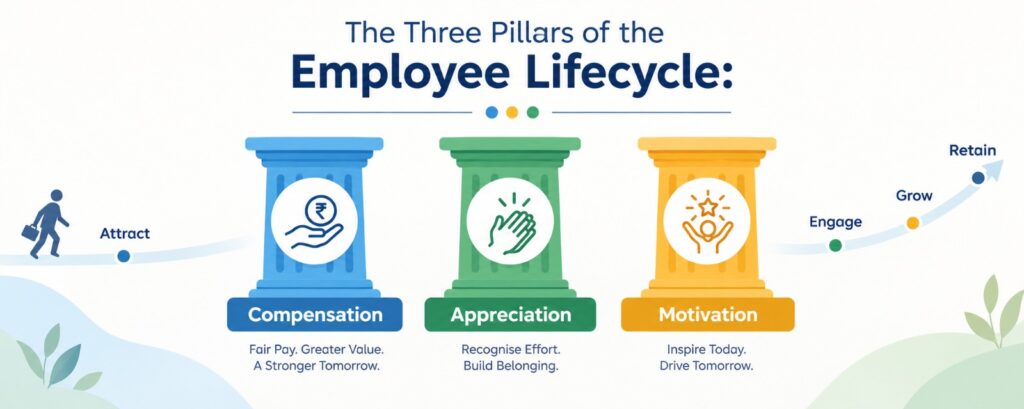
An employee’s journey is shaped by three powerful forces: Compensation, Appreciation, and Motivation.
Compensation: Why Employees Join
When an employee receives a job offer, compensation is naturally one of the first considerations.
Is the salary fair? Are the benefits competitive? Does the organization recognize the value of the employee’s skills, experience, and contribution?
When the answer is yes, the employee feels that the organization values their professional contribution.
Compensation gets an employee through the door.
But once the excitement of joining fades, another question begins to emerge:
“What is my future here?”
Motivation: Why Employees Give Their Best
As the employee settles into the role, responsibilities increase. Deadlines become demanding, challenges arise, and routine work can sometimes reduce enthusiasm.
This is where motivation becomes critical.
A manager who takes time to understand an employee’s aspirations, provides opportunities to learn, gives meaningful responsibilities, and creates a path for career growth can transform the employee’s experience.
The employee begins to see more than a job—they see a future.
Motivation gives employees a reason to grow, contribute, and give their best.
And motivation isn’t always about money.
It can come from purpose, learning, autonomy, responsibility, career growth, meaningful challenges, or simply knowing that someone believes in their potential.
Appreciation: Why Employees Feel Valued
Then comes one of the most powerful moments in an employee’s journey.
After successfully completing a challenging assignment or helping the team achieve an important goal, the employee hears:
“Thank you. Your contribution made a difference.”
It may take only a few seconds to say.
But those few seconds can have a lasting impact.
Appreciation makes an employee feel seen, valued, and respected.
Employees may forget many meetings, emails, and routine tasks. But they often remember the moment when someone genuinely recognized their effort.
Appreciation creates an emotional connection with the workplace.
The Employee Lifecycle
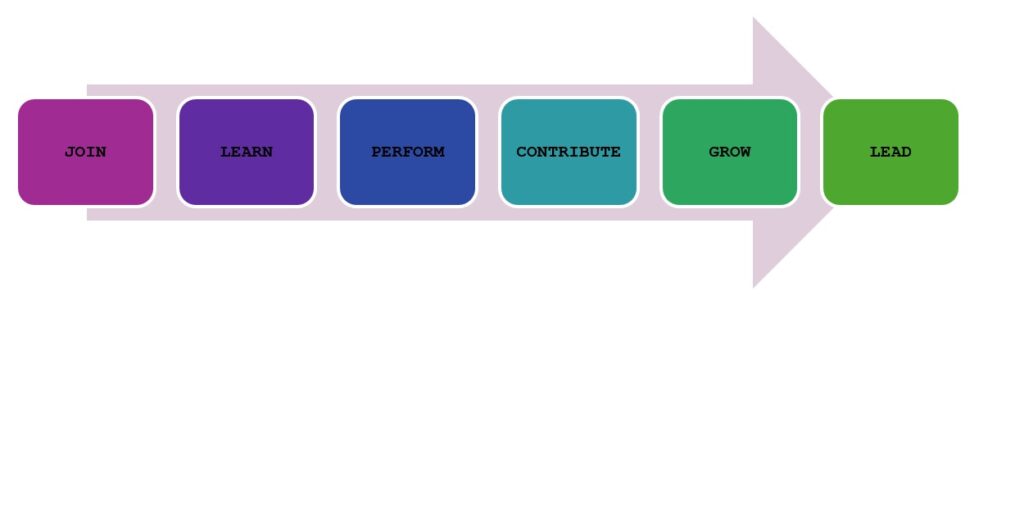
The employee journey can be viewed as:
JOIN → LEARN → PERFORM → CONTRIBUTE → GROW → LEAD
And throughout this journey, three questions remain important:
Compensation:
“Am I rewarded fairly?”
Motivation:
“Do I have a reason to give my best?”
Appreciation:
“Does my organization value what I contribute?”
When these three elements come together, an employee moves beyond simply completing a job description.
They become an engaged contributor, a potential future leader, and eventually an ambassador for the organization.
The Leadership Lesson
Organizations often focus heavily on compensation because it is measurable and tangible. But employee engagement requires more than a payslip.
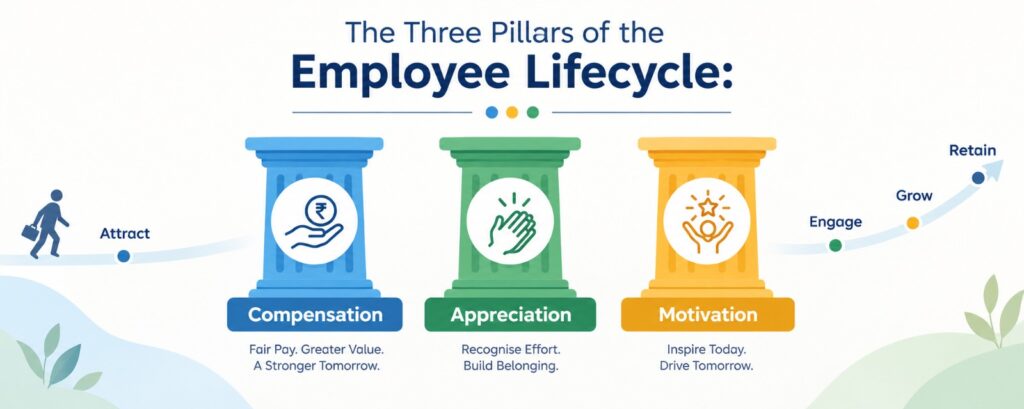
Compensation attracts.
Motivation energizes.
Appreciation connects.
Remove compensation, and employees may feel undervalued.
Remove motivation, and performance may become routine.
Remove appreciation, and employees may eventually stop feeling that their contribution matters.
The strongest employee experience happens when all three work together.
Because at the end of the day, employees don’t just want to know:
“What do I get?”
They also want to know:
“What can I become?”
And most importantly:
“Do I matter?”