
If you had asked me 5 or 6 years ago what would determine career success, I would have handed you a list of certifications, software tools, and technical competencies. Like many professionals, I grew up believing that hard skills were the ultimate currency of the workplace. Master the tool & success is yours.
Then the world changed. Generative AI began writing codes within seconds, automated systems took over complex data analysis. And over the time, the technical mechanics that once set top performers apart became basic expectations. And that is when the real shift happened
At many corporate meetings, the point of failure was almost never a lack of technical expertise. It was a communication breakdown. It was a leader who couldn’t navigate team conflict, a brilliant strategist who couldn’t persuade stakeholders, or a team that paralyzed under change.
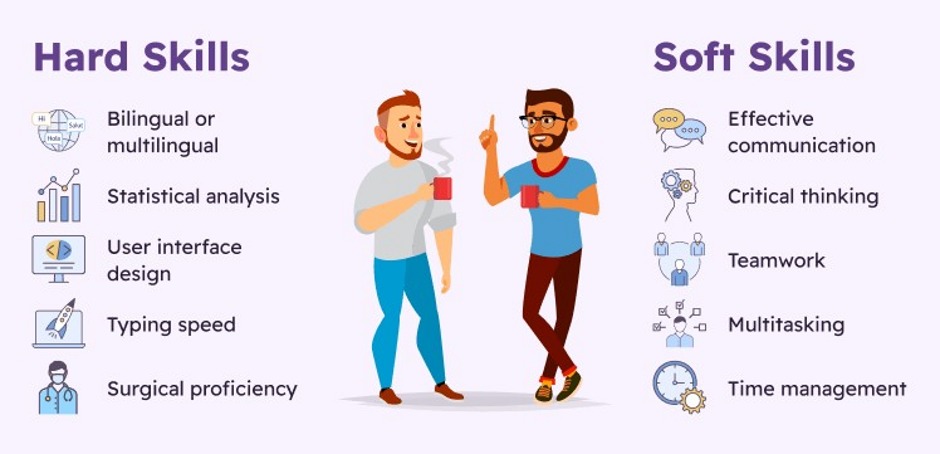
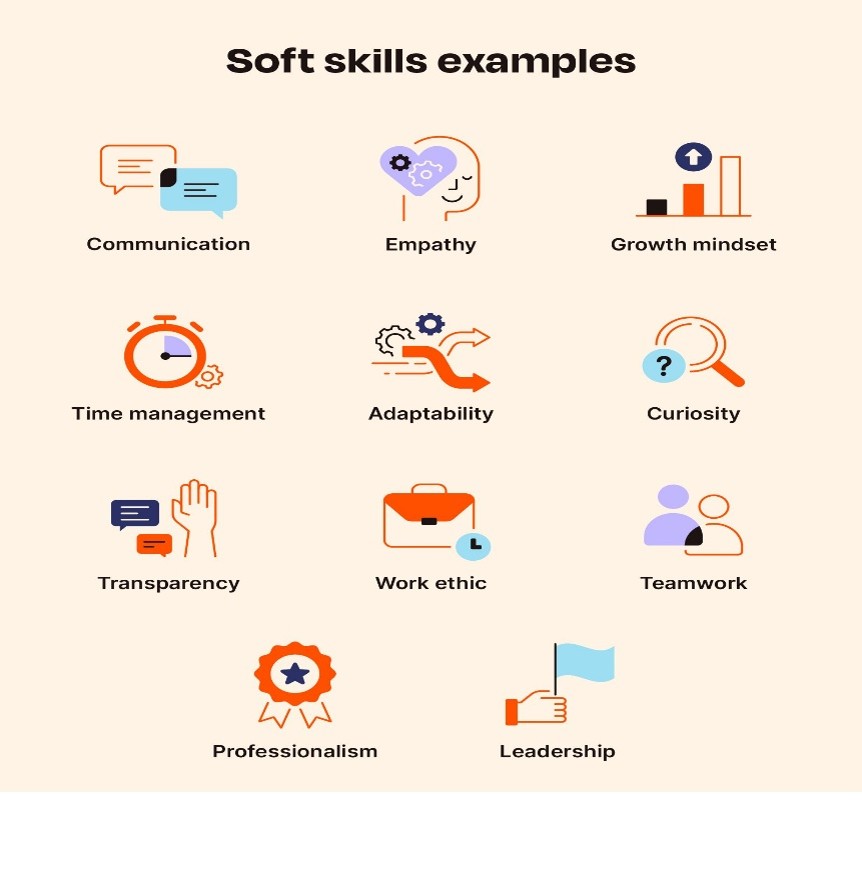
We call these “soft skills” – a term that severely underestimates their weight. In reality, empathy, adaptability, emotional intelligence, and persuasive communication are the hardest capabilities to cultivate. They are also the only traits that artificial intelligence cannot replicate.
According to a foundational joint study on workplace success conducted by Harvard University/Stanford Research Institute:
“Soft skills are the non-technical competencies that account for 85% of job success, whereas technical knowledge and hard skills account for only 15%.”
International Labour Organization (ILO) provides a global policy and workforce development perspective: “Soft skills refer to a broad set of skills, behaviours, attitudes, and personal qualities that enable people to effectively navigate their environment, work well with others, perform well, and achieve their goals.”
The World Economic Forum (WEF) categorizes skills through its Global Skills Taxonomy (featured in its Future of Jobs Reports). Rather than treating soft skills as a single vague ides, the WEF groups human and non-technical capabilities into three distinct macro-clusters:
1. Cognitive Skills (The Thinking Traits)
These skills govern how individuals process information, solve novel problems, and make decisions under uncertainty.
- Analytical Thinking: Evaluating complex datasets, identifying logic gaps, and spotting trends. Ranked by the WEF as the single most critical core skill overall (cited by ~69% of employers).
- Creative Thinking: Connecting seemingly unrelated concepts to invent original solutions or business models.
- System Thinking: Understanding how individual components within a company, market, or technological ecosystem interact with and impact one another.
2. Self-Efficacy (The Mindset Traits)
These capabilities reflect an individual’s internal drive, psychological strength, and capacity to handle rapid change.
- Resilience, Flexibility, & Agility: Adapting quickly when strategies fail or when market conditions shift unexpectedly.
- Motivation & Self-Awareness: Regulating personal emotions, recognizing limitations, and driving projects forward without micro-management.
- Curiosity & Lifelong Learning: Maintaining a growth mindset and proactively unlearning outdated methods to acquire new capabilities.
3. Working with Others (The Social & Relational Traits)
These skills dictate how effectively an individual leads, collaborates, and navigates interpersonal dynamics.
- Leadership & Social Influence: Inspiring, persuading, and guiding teams toward a vision, especially without relying solely on direct authority.
- Empathy & Active Listening: Understanding divergent perspectives, building psychological safety, and listening to comprehend rather than just to reply.
- Talent Management & Mentoring: Developing people, giving constructive feedback, and coaching team members for future growth.
- Service Orientation: Identifying customer or client needs and orienting strategies around human satisfaction.
It is one thing to acknowledge that soft skills matter; it is another to systematically build them. Historically, organizations treated human capabilities as fixed personality traits-you either had them or you didn’t.
Today, that assumption is dead. Corporate L&D programs and executive coaching platforms are radically shifting from passive talent management to active human-skills reskilling.
The Soft Skill Training Revolution has three phases:
- From “Awareness” to Experiential Repetition: You cannot learn difficult conversations from a lecture or a slide deck. Modern training uses immersive roleplay, crisis simulations, and real-time behavioral feedback to build emotional muscle memory under pressure.
- AI as a Soft-Skills Sandbox: Paradoxically, the technology threatening to displace technical labor is becoming the ultimate practice ground for human interaction. Generative AI simulations now allow managers to practice delivering tough performance reviews, resolving team friction, or pitching difficult clients in low-stakes, real-time interactive environments.
Tying “Soft” Behaviour to Hard Business Metrics: Organizations are no longer funding soft skills training for executive wellness; they are measuring its direct return on investment. High emotional intelligence directly translates to faster cross-functional delivery, lower employee turnover, and cleaner execution during organizational change.
Conclusion:
The message for today’s workforce is unmistakable: relying solely on technical domain knowledge is a declining strategy. As tools handle more of the execution, your value rests on how well you interpret human context, navigate uncertainty, and align people around a common goal. Technical expertise gets you invited to the game; it’s your human capability that determines whether you win it.