
In today’s workplace, communication has become a constant part of professional life. From emails and presentations to virtual meetings and team discussions, employees are expected to communicate professionally almost all the time. While technology has made communication faster and more connected, it has also quietly created a pressure that many people experience but rarely talk about — the pressure to sound professional all the time.
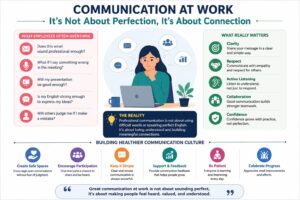
What Employees Often Overthink at Work:
Many young professionals enter workplaces with strong academic knowledge and technical skills. Yet, when it comes to speaking during meetings, replying to emails, or expressing ideas confidently, hesitation often appears. Surprisingly, the issue is not always a lack of communication skills
Questions like:
- “Does this email sound professional enough?”
- “What if my English is not fluent?”
- “What if I say something wrong during the meeting?”
- “Am I sounding confident enough?”
- “Should I speak or stay quiet?”
have become more common than we realize.
A simple message is often typed, deleted, and rewritten several times before sending. Employees hesitate before unmuting themselves in virtual meetings. Some avoid sharing ideas completely, not because they lack knowledge, but because they fear sounding unprofessional or being judged for the way they communicate.
Professional Communication Is More Than Perfect English :
One important thing modern workplace often overlook is that professional communication is not about using difficult vocabulary or speaking perfect English.
In reality, Effective workplace communication is often built on
- Clarity
- Confidence
- Respectful Interaction
- Collaboration
- Active Listening
- Understanding the audience.
A person who can express ideas clearly and collaborate effectively often creates a stronger impact than someone trying too hard to sound formal.
This pressure is especially visible among fresh graduates and young professionals entering corporate environments for the first time. During college life, communication usually feels natural and informal. However, once individuals enter professional settings, communication suddenly feels more performance-driven. Employees begin to think carefully about tone, wording, body language, and even how quickly they should respond to workplace messages.
Digital Work Culture and Communication Anxiety :
Virtual work culture has added another layer to this challenge. Online meetings and digital communication platforms have changed the way people interact professionally. Many employees hesitate to speak during virtual meetings because they fear interrupting others, sounding unclear, or making mistakes in front of larger groups. Similarly, workplace chats and emails often create pressure to appear polished and professional at all times.
Over time, this constant self-monitoring can affect confidence and participation at work. Employees may stop asking questions, avoid contributing ideas, or remain silent during discussions even when they have valuable inputs. This can reduce collaboration and create communication gaps within teams. In some cases, talented individuals remain unnoticed simply because they hesitate to express themselves openly.
Building Healthier Communication Cultures
However, creating healthier communication environments does not always require dramatic changes. Small shifts in workplace culture can make a significant difference such as
- Encouraging open discussions
- Allowing room for mistakes and learning
- Reducing fear of judgment
- Focus on clarity over perfection
- Creating supportive team environments
Employees themselves can also build healthier communication habits by focusing less on sounding perfect and more on being clear and genuine. Listening actively, speaking with confidence, participating gradually in discussions, and understanding that mistakes are part of professional growth can reduce unnecessary communication anxiety over time.
Communication Should Not Feel Like Performance

At the same time, workplaces need to recognize that professionalism should not mean sounding robotic or overly formal in every interaction. True professionalism is reflected in respectful communication, collaboration, clarity, and the ability to connect with people effectively.
At the end of the day, the most effective communicators in a workplace are not always the ones using the most sophisticated language. Often, they are the people who make others feel understood, respected, and comfortable during conversations.
Conclusion
The pressure to sound professional may continue to exist in modern workplaces, but building communication cultures based on confidence, authenticity, and understanding can help people replace fear with meaningful professional growth.